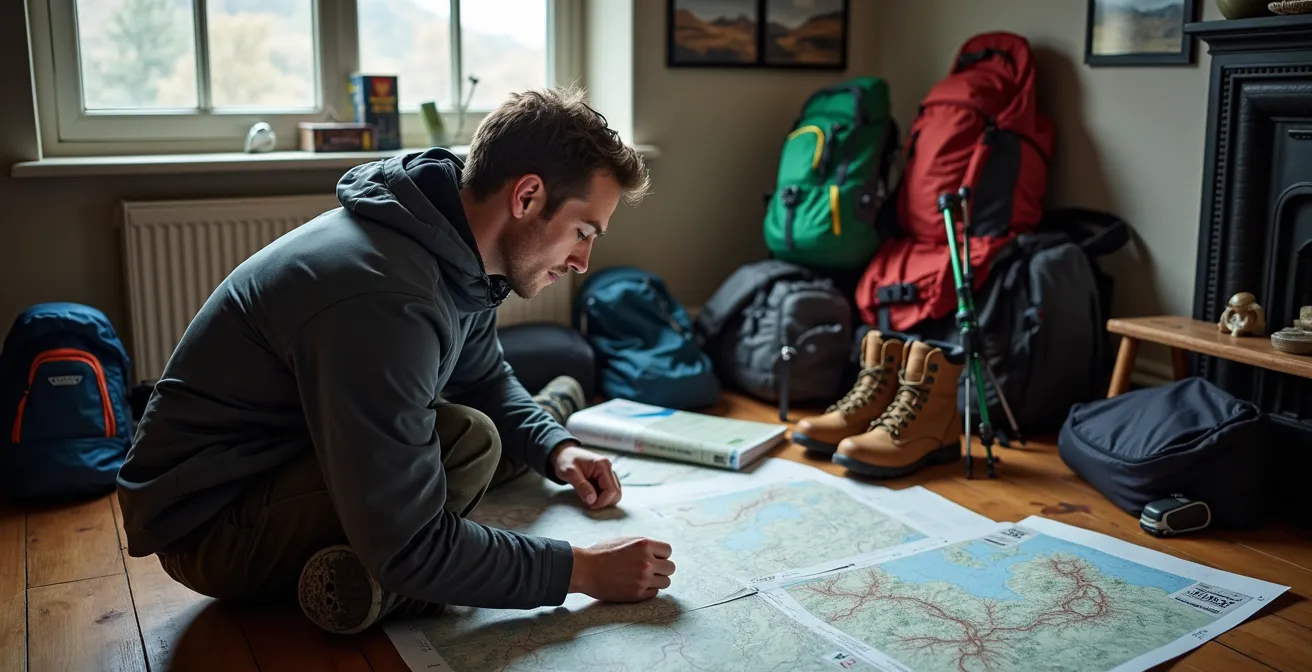
Your experience in the Lake District or Snowdonia is a foundation, not a passport, for the Alps; success hinges on unlearning UK habits and systematically de-risking the new challenges of altitude, terrain, and European logistics.
- Physical fitness alone does not prevent altitude sickness; acclimatisation is a separate physiological process.
- Standard travel insurance is often void above 2,500 metres, exposing you to helicopter rescue costs that can exceed €10,000.
- UK hill walking boots (B0) lack the stiffness required for Alpine terrain, making B1 or B2 boots a critical safety investment.
Recommendation: Shift your preparation focus from simply increasing mileage to simulating Alpine conditions: practice sustained scrambling in North Wales, prioritise your budget on boots and specialist insurance over gym memberships, and meticulously audit your policy’s altitude and activity clauses.
For the dedicated UK hill walker, the call of the Alps is a natural progression. You’ve summited Scafell Pike in the mist, navigated Crib Goch with a steady hand, and endured the relentless wind of the Cairngorms. The assumption is that this hard-won fitness and experience will translate directly to the sun-drenched trails of the Tour du Mont Blanc. This is a dangerous misconception. While your cardiovascular fitness is an asset, it can create a false sense of security that masks the unique and unforgiving nature of the Alpine environment.
The common advice is to “get fitter” or “buy good gear,” but this advice is dangerously superficial. It fails to address the fundamental differences that can turn a dream trip into a logistical nightmare or a medical emergency. The air is thinner, the ascents and descents are longer and more relentless, the terrain demands a different class of equipment, and the safety net of volunteer mountain rescue you rely on in England and Wales simply does not exist. A twisted ankle in the Glyderau might mean a long walk out; in the Aiguilles Rouges, it likely means a helicopter evacuation with a bill attached.
But what if the key to a successful first Alpine trek wasn’t about doing *more* of what you do in the Peak District, but about a systematic process of de-risking? This guide is not about adding more miles to your training walks. It is a technical manual for the experienced UK hill walker, designed to expose the critical blind spots your British experience creates. We will deconstruct the specific challenges of altitude, insurance, equipment, and training, providing you with a framework to transition from the fells to the high Alps safely and confidently.
This article provides a structured approach to your preparation, moving from the physiological realities of high altitude to the practicalities of insurance, gear selection, and UK-based training. By following this guide, you will learn to identify and mitigate the specific risks associated with your first major Alpine expedition.
Summary: A UK Hill Walker’s Technical Guide to Alpine Preparation
- Why Fitness Won’t Save You from Altitude Sickness at 3000m?
- The Insurance Clause That Voids Cover Above 2500 Metres
- Leather or Synthetic: Which Boots Survive the Tour du Mont Blanc?
- Where to Find ‘Alpine’ Training Terrain in North Wales?
- When to Book Alpine Huts to Avoid Sleeping on the Dining Room Floor?
- £40/Month Gym or High-End Waterproofs: Where to Spend Your Budget?
- Why a Helicopter Rescue in the Alps Costs More Than Your Mortgage?
- Extreme Sports Insurance: What Does a Standard Policy Actually Exclude?
Why Fitness Won’t Save You from Altitude Sickness at 3000m?
The first critical error a fit UK hill walker makes is conflating cardiovascular fitness with altitude acclimatisation. You may be able to maintain a fast pace up Helvellyn, but this ability has almost no bearing on how your body will react to the reduced oxygen levels at 3,000 metres. Acute Mountain Sickness (AMS) is a neurological and physiological response to a lower partial pressure of oxygen, and it affects everyone regardless of their fitness level. In fact, very fit individuals are sometimes at greater risk because they ascend too quickly, not giving their bodies the necessary time to adapt.
The process of acclimatisation involves the body making complex adjustments, such as increasing red blood cell production and changing breathing patterns. This takes time—days, not hours. The headache, nausea, and fatigue of AMS are warning signs that you have ascended too high, too fast. Ignoring these symptoms can lead to life-threatening conditions like High-Altitude Pulmonary Edema (HAPE) or High-Altitude Cerebral Edema (HACE). Your marathon personal best is irrelevant when fluid is filling your lungs.
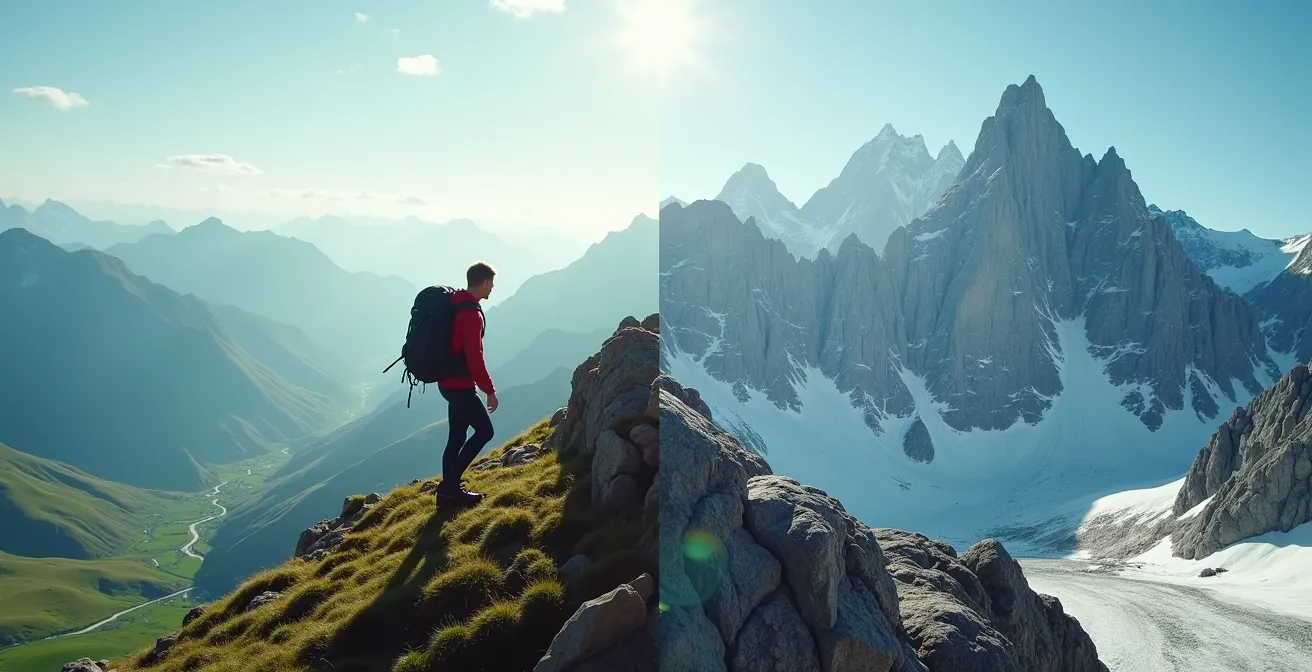
This image starkly contrasts the familiar challenge of a UK peak with the alien environment of high altitude, where fatigue and symptoms are dictated by oxygen levels, not just muscle power.
For UK residents, true preparation involves either planning a slow, staged ascent in the Alps (e.g., spending several nights at progressively higher altitudes) or considering pre-acclimatisation at home. Specialised services in the UK offer hypoxic tent rentals, which simulate a high-altitude environment while you sleep. While an investment, it can significantly reduce the risk of your multi-thousand-pound holiday being ruined by AMS in the first 48 hours.
The Insurance Clause That Voids Cover Above 2500 Metres
The second major blind spot for the UK trekker is insurance. You would never venture into the Scottish Highlands without a map and compass, yet many head to the Alps with a standard travel insurance policy that is effectively worthless for their intended activity. Most generic policies contain clauses that specifically exclude trekking or mountaineering above a certain altitude, typically 2,500 metres—an elevation you will likely exceed on your very first day of a classic Alpine route.
This isn’t a minor detail; it’s a financial trap. While a rescue in the Lake District is carried out by volunteers and is free of charge, an organised rescue in the French or Swiss Alps is a professional service. As an analysis by the British Mountaineering Council (BMC) highlights, a PGHM helicopter rescue in the French Alps can cost between €5,000 and €10,000. If your insurance is void, that bill comes directly to you. This is why specialist insurance is not an optional extra; it is as critical as your boots and waterproofs.
Organisations like the BMC provide policies designed by mountaineers, for mountaineers. They understand the difference between hill walking and Alpine trekking and offer tiered coverage to match. The following comparison illustrates how specialist policies are structured to cover the specific activities and altitudes you will encounter.
| Policy Type | Altitude Limit | Activities Covered | Suitable For |
|---|---|---|---|
| Trek | Up to 5,000m | Hill walking, trekking, backpacking | Tour du Mont Blanc walkers |
| Rock | Up to 5,000m | Rock climbing, bouldering, graded scrambling | UK climbers on Alpine rock routes |
| Alpine & Ski | Up to 6,500m | Mountaineering, glacier travel, off-piste skiing | Gran Paradiso, Mont Blanc attempts |
Your Pre-Purchase Insurance Audit
- Verify altitude limits: Check the policy wording for specific numbers. “Up to 2,500m” is a common exclusion that invalidates cover for most Alpine treks.
- Check guided vs. unguided clauses: Ensure your policy covers you for unguided trekking if you are not with a formal group.
- Confirm geographical coverage: If your trek crosses borders (e.g., the TMB through France, Italy, and Switzerland), ensure all three countries are covered.
- Review single article limits: A standard £250 limit will not cover the replacement cost of a £500 waterproof jacket or a £1,000 camera.
- Ask about competition exclusions: If you are participating in an event like the UTMB, you will almost certainly require separate, specialised race insurance.
Leather or Synthetic: Which Boots Survive the Tour du Mont Blanc?
Your trusty UK hill walking boots have served you well, but the demands of Alpine terrain are fundamentally different. A typical British trail is soft, peaty, or muddy. Alpine trails consist of hard-packed earth, sharp scree, and long sections of moraine—broken rock that acts like sandpaper on footwear. Furthermore, many classic routes involve short glacier crossings or steep, permanent snowfields where the use of crampons may be necessary. Your flexible, B0-rated fabric boots are not designed for this.
The key differentiator is midsole stiffness, categorised by the B-rating system. A B0 boot is flexible for comfort on rolling hills. A B1 boot offers a stiffer sole, providing better support on rocky ground and allowing the fitting of flexible C1 crampons for snow crossings. A B2 boot is stiffer still, suitable for winter mountaineering and more technical Alpine ground. For a route like the Tour du Mont Blanc or the Walker’s Haute Route, a B1 boot is the minimum requirement for safety and comfort. Using a B0 boot is not just uncomfortable; it’s dangerous. The lack of support leads to foot fatigue, increasing the risk of slips and falls, and they cannot be safely paired with crampons.
The justification for this investment becomes clear when considering the daily demands. In the Alps, it is common to face days that may involve 1,300m of ascent, followed by an equally long descent. A stiff-soled boot protects your feet from sharp rocks underfoot and provides critical ankle support on steep, uneven descents, reducing the strain on your joints. A high-quality pair of leather B1 boots might cost £300, but they will last for years and protect your most valuable asset. A cheaper synthetic pair may not even survive a single Alpine season.
Where to Find ‘Alpine’ Training Terrain in North Wales?
Living in a relatively flat country like England presents a significant training challenge. While long walks in the Peak District build endurance, they fail to replicate two key aspects of Alpine trekking: sustained vertical ascent and exposure on technical, rocky ground. Your objective should not be to clock up horizontal miles but to maximise vertical metres and time spent on Grade 1 and 2 scrambles.
North Wales, and Snowdonia in particular, offers the best Alpine training ground in the UK. The terrain is rocky, steep, and provides the exposure needed to build mountain sense and confidence. High Mountain Guides, for instance, specifically use Welsh terrain for pre-Mont Blanc training. They recommend the traverse of Tryfan and the Glyderau as essential preparation, as it involves sustained scrambling on terrain similar to Alpine ridges, forcing you to use your hands and concentrate for long periods. This is direct terrain simulation.
Your training weekends should be structured missions. Instead of aiming for a 20-mile loop, your goal should be to link multiple peaks to achieve over 1,000m of total ascent in a day, carrying the pack you intend to use in the Alps. Routes like the Snowdon Horseshoe, including the knife-edge arête of Crib Goch, are unparalleled for acclimatising your mind to exposure.
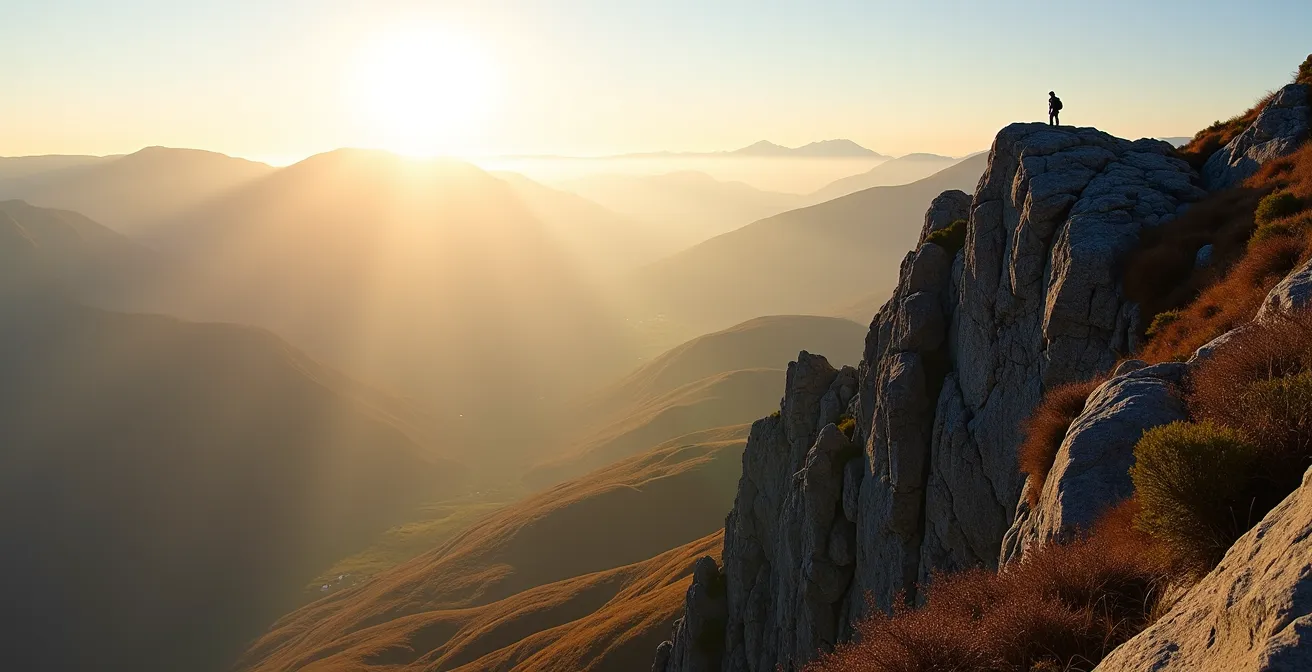
This kind of terrain forces you to move efficiently and securely on rock, testing your balance and footwork in a way that a grassy path never can. Monitoring your performance with a GPS watch is crucial. Track your vertical metres per hour. A good benchmark for Alpine readiness is being able to sustain 400-500 vertical metres per hour over several hours. This is the metric that matters in the Alps, not your pace on the flat.
When to Book Alpine Huts to Avoid Sleeping on the Dining Room Floor?
Logistical discipline is as important as physical training. In the UK, you can often decide to go for a wild camp on a whim. In the Alps, the hut (or ‘refuge’) system is the backbone of multi-day trekking, and it operates on a strict set of rules and cultural norms that can be baffling to the first-timer. The most critical rule is that you must book well in advance, especially on popular routes like the TMB.
Huts are not hotels; they are functional mountain shelters with limited space. Turning up without a reservation during peak season (July and August) will likely result in you being turned away or, if you’re lucky, offered a mattress on the dining room floor after everyone else has gone to bed. You should aim to book your huts at least 3-4 months in advance. Be aware that European school holiday dates differ from the UK’s, creating unexpected peaks in demand. For many huts, you can book online or via email, but some still require a phone call.
Joining an Alpine club is a wise investment. Membership in the Austrian Alpine Club (UK Section), for example, provides significant discounts in thousands of huts across the Alps (not just in Austria) and includes built-in rescue and medical insurance, often making it a more cost-effective option than buying insurance separately. It is also a legal requirement in most Alpine countries that you only use 100% certified guides and instructors (UIMLA or IFMGA) if you hire one, a standard that club membership helps you verify. Understanding hut etiquette—such as the half-board (demi-pension) system, the strict ‘lights out’ times, and the fact you won’t find a full English breakfast—is key to a smooth experience.
£40/Month Gym or High-End Waterproofs: Where to Spend Your Budget?
Preparing for an Alpine trek requires a significant financial outlay, and misallocating your budget can have serious consequences. A common mistake is spending money on a gym membership for general fitness while skimping on critical safety equipment. Your preparation budget should be guided by a principle of consequence-based prioritisation. Ask yourself: what is the consequence of this item failing?
If your gym routine is suboptimal, you may be slower on the trail. If your boots fail, your trek is over, and you risk injury. If your waterproof jacket fails in a high-altitude storm, you risk hypothermia. If your insurance is inadequate, you risk financial ruin. This framework makes it clear where the priorities lie: boots, waterproofs, and insurance are non-negotiable, critical investments. A three-month gym membership is optional.
Sourcing gear in the UK gives you plenty of options, but you must be a discerning buyer. High-end equipment is expensive, but it’s an investment in your safety. For those on a tighter budget, the second-hand market can be an excellent resource, provided you know what to look for. UK-based Facebook groups like ‘Outdoor Gear Exchange UK’ and the forums on UKClimbing.com are reputable places to find quality used gear from experienced users. However, always inspect items like waterproof jackets carefully for any signs of delamination or failure of the seam tape. For certain items, budget-friendly new alternatives from brands like Alpkit or Decathlon offer excellent value.
The table below provides a clear hierarchy for your spending, focusing on items where failure has the most severe consequences.
| Item | UK Price Range | Priority Level | Failure Consequence |
|---|---|---|---|
| Quality Boots | £250-£400 | Critical | Blisters, trek abandonment |
| Waterproof Jacket | £200-£500 | Critical | Hypothermia risk |
| Insurance (BMC Alpine) | £150-£300 | Critical | Financial ruin from rescue costs |
| Trekking Poles | £40-£120 | Moderate | Knee strain, reduced stability |
| Gym Membership (3 months) | £120 | Optional | Lower fitness level |
Why a Helicopter Rescue in the Alps Costs More Than Your Mortgage?
The concept of free mountain rescue is deeply ingrained in the UK hill-going psyche. We see the yellow RAF Sea King or the red and white Coastguard helicopter and associate it with help, not a bill. In the Alps, the sight of a PGHM (Peloton de Gendarmerie de Haute Montagne) or Rega helicopter is a prelude to a significant financial event. This is perhaps the single most important cultural and practical difference a UK walker must internalise.
Rescue in the Alps is not a volunteer service; it is a highly professional, government- or privately-run operation. The costs associated with a helicopter, its pilot, and its medical crew are passed on to the person being rescued. Even a minor incident that would be a self-rescue in the UK can trigger a helicopter evacuation in the Alps due to the scale of the terrain and the time it would take to get you to safety. A sprained ankle or a bout of severe sickness at a remote refuge can easily result in a call-out.
The costs are staggering. As specialist operators Mont Blanc Mountain Guide point out, even minor incidents can necessitate an evacuation, with rescue costs potentially reaching €5,000-€10,000. This is why specialist insurance with specific cover for mountaineering rescue, medical expenses, and repatriation is non-negotiable. As the same guide notes, this is a fundamental requirement for any overseas Alpine activity.
The British Mountaineering Council offers the gold standard in insurance for UK residents, with very competitive single trip or annual cover for all climbing activities.
– Mont Blanc Mountain Guide, Mountaineering Insurance Guidelines
Thinking that your European Health Insurance Card (EHIC) or new Global Health Insurance Card (GHIC) will cover you is a critical mistake. These cards cover state-provided emergency medical treatment in a hospital; they do not cover the cost of mountain rescue to get you to that hospital.
Key Takeaways
- Your UK hill fitness is not a substitute for proper altitude acclimatisation.
- Standard insurance is void in the Alps; specialist cover for rescue up to at least 5,000m is mandatory.
- Your flexible UK walking boots are inadequate; you need a minimum B1-rated boot for Alpine terrain and safety.
Extreme Sports Insurance: What Does a Standard Policy Actually Exclude?
You have accepted the need for specialist insurance. The final step in this systematic de-risking process is to audit the policy before you buy it. Not all ‘mountaineering’ or ‘trekking’ insurance policies are created equal. The devil is in the detail, and you must read the policy wording carefully to ensure it covers exactly what you plan to do. Insurers will use any ambiguity in the fine print to avoid paying a claim.
The primary item to verify is the altitude limit. A policy that covers ‘trekking’ but only up to 4,000m is useless if your route involves a pass at 4,100m. You must ensure the limit is comfortably above the highest point of your itinerary. For example, a quality specialist policy like the BMC Alpine & Ski policy covers peaks up to 6,500m, which provides ample cover for almost any trekking or introductory mountaineering objective in the Alps.
Beyond altitude, you must check the activity-specific clauses. Does the policy cover ‘trekking on marked trails’ only? This could be problematic if your route includes a short, off-trail glacier crossing. Does it cover ‘scrambling’? If so, up to what grade? Does it differentiate between guided and unguided activities? Some policies offer a lower premium if you are with a certified guide. Finally, check the equipment and cancellation cover. Ensure the single-item limit is high enough to replace your expensive gear and that the cancellation clause covers you if you have to pull out of the trip for a valid reason.
To truly protect yourself, you must meticulously check the policy wording against your planned itinerary before committing. This diligence is the final, and most crucial, act of preparation. It ensures that if the worst happens, you are focused on your recovery, not on a life-altering bill.
Frequently Asked Questions about Alpine Trekking for UK Walkers
When should UK trekkers book Alpine hut accommodations?
Book at least 3-4 months in advance, avoiding European school holidays which differ from UK dates. French and Swiss August holidays create peak demand.
What’s the Austrian Alpine Club UK membership advantage?
Membership provides significant discounts in huts across the Alps (not just Austria) and includes built-in rescue and medical insurance, often making it cheaper than single-country clubs.
What should UK trekkers expect in Alpine huts?
Communal sleeping arrangements, half-board (demi-pension) system, strict lights-out times, and no full English breakfast. Understanding these cultural differences prevents awkward situations.