In summary:
- Your “biodegradable” waste, like banana peels, can take years to decompose on UK moorland, harming sensitive soils.
- Protecting wildlife means more than just avoiding animals; it means keeping dogs on leads during nesting season (March-July) and sticking to paths.
- Supporting local farm shops directly funds the maintenance of the very landscapes—hedgerows, orchards—that you’ve come to enjoy.
- Car-free travel via trains and cycle paths is the most effective way to reduce your impact and discover quieter parts of the biosphere.
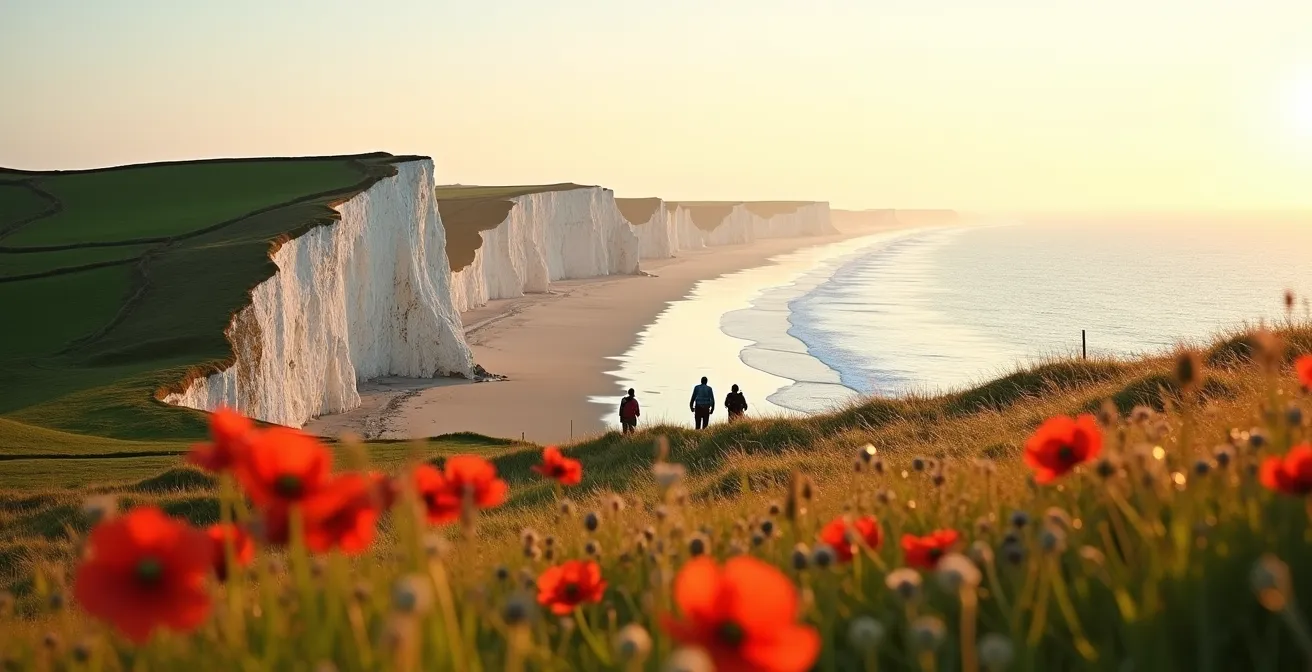
The feeling of standing atop the white cliffs, with the English Channel stretching out and the green rolling hills of the South Downs behind you, is a powerful one. It feels ancient, resilient, and wild. As a visitor to the Brighton & Lewes Downs, one of the UK’s precious UNESCO Biosphere reserves, your first instinct is to protect it. You’ve likely heard the mantra “leave no trace,” a vital first step. But what if I told you that true, meaningful conservation goes much deeper than simply packing out your rubbish?
Many well-intentioned visitors make small mistakes they don’t even realise are harmful. They might leave a banana peel, thinking it will biodegrade quickly. They might let their dog run free in a field, far from any visible wildlife. These actions, seemingly innocent, can have significant negative consequences in a finely tuned ecosystem like ours. The standard advice often misses the crucial context: the unique character of our chalk grasslands, the specific life cycles of our ground-nesting birds, and the powerful, non-negotiable rhythm of our tides.
But what if the key wasn’t just following a list of rules, but truly understanding the ‘why’ behind them? This guide offers a different perspective—that of a local conservation officer. My goal is to move you from being a passive visitor to a ‘regenerative’ one. We’ll explore the delicate ecological interconnections of this landscape, showing you how simple, informed choices about your journey, your lunch, and even your timing can actively help protect and preserve the beauty of this place for generations to come. It’s about becoming a guardian of the landscape during your stay, not just a guest.
This article will provide you with the practical knowledge needed to navigate our unique environment responsibly. We’ll cover everything from the surprisingly slow decomposition of organic matter on our soil to the best car-free ways to reach us, ensuring your visit leaves nothing but footprints and takes nothing but memories.
Summary: How to Explore the Brighton & Lewes Biosphere Without Harming It?
- Why Banana Peels Don’t Decompose Quickly on British Moorland?
- How to Reach the North Devon Biosphere Without a Car?
- The Dog Walking Mistake That Threatens Ground-Nesting Birds
- Supermarket vs Farm Shop: Why Buying Local Protects the Landscape?
- When to Visit Coastal Reserves to Avoid Getting Cut Off by Tides?
- When to Visit Royal Parks to Avoid the Tourist Crowds?
- When to Visit National Parks to Minimise Ecological Disturbance?
- Which Lesser-Known UK UNESCO Sites Are Worth a Detour?
Why Banana Peels Don’t Decompose Quickly on British Moorland?
It’s one of the most common misconceptions we see on the Downs. A visitor finishes a piece of fruit and tosses the peel or core into the undergrowth, believing it’s natural and will “biodegrade.” While that’s true in a tropical jungle, it’s dangerously false on the chalk grasslands and heathlands of Britain. Our cooler, less humid climate and nutrient-poor soil mean that a single banana peel can take up to two years or more to fully break down, looking like ugly litter the entire time.
This isn’t just an aesthetic problem. This “organic litter” changes the soil chemistry in a small area, which can disrupt the delicate balance of native wildflowers and grasses that are adapted to low-nutrient conditions. It also habituates wildlife to human food, which can be harmful to their health and behaviour. The scale of the issue is significant; a recent report from Leave No Trace Brighton highlighted that 270kg of waste was collected from local beaches in a single year, a stark reminder of our collective impact.
The core principle is to pack out everything you pack in, regardless of whether it’s plastic, glass, or organic. The landscape character of our biosphere is defined by its specific, slow-growing flora. Leaving behind a piece of fruit from another continent is an ecological disruption. If public bins are full—a common sight on sunny bank holidays—your responsibility doesn’t end. Taking your waste home with you is the single most important act of a responsible visitor and a true sign of respect for the environment you’ve come to enjoy.
How to Reach the North Devon Biosphere Without a Car?
While our focus is the Brighton & Lewes Downs, the principles of responsible access apply across all of the UK’s precious biospheres, including the stunning North Devon coast. One of the biggest threats to these areas is not malicious damage, but the sheer pressure of visitor numbers, much of it arriving by car. Traffic congestion clogs narrow country lanes, car parks overflow, causing soil erosion and verge damage, and the carbon footprint of thousands of individual journeys adds up.
The most effective way to reduce this pressure is to leave the car behind. The UK’s public transport network, combined with a growing infrastructure for active travel, offers a more sustainable and often more rewarding way to explore. The Living Coast, our own biosphere, has actively championed this approach. A fantastic initiative in partnership with So Sussex developed GPS-linked cycle routes that are easily accessible from mainline train stations like Brighton, Lewes, and Southend.
This approach transforms the journey into part of the adventure. Imagine stepping off a train and onto a dedicated cycle path, pedalling through the very landscape you’ve come to see, with real-time route information and suggestions for sustainable local businesses for a well-earned coffee. It’s a model that proves accessibility and conservation can go hand-in-hand.
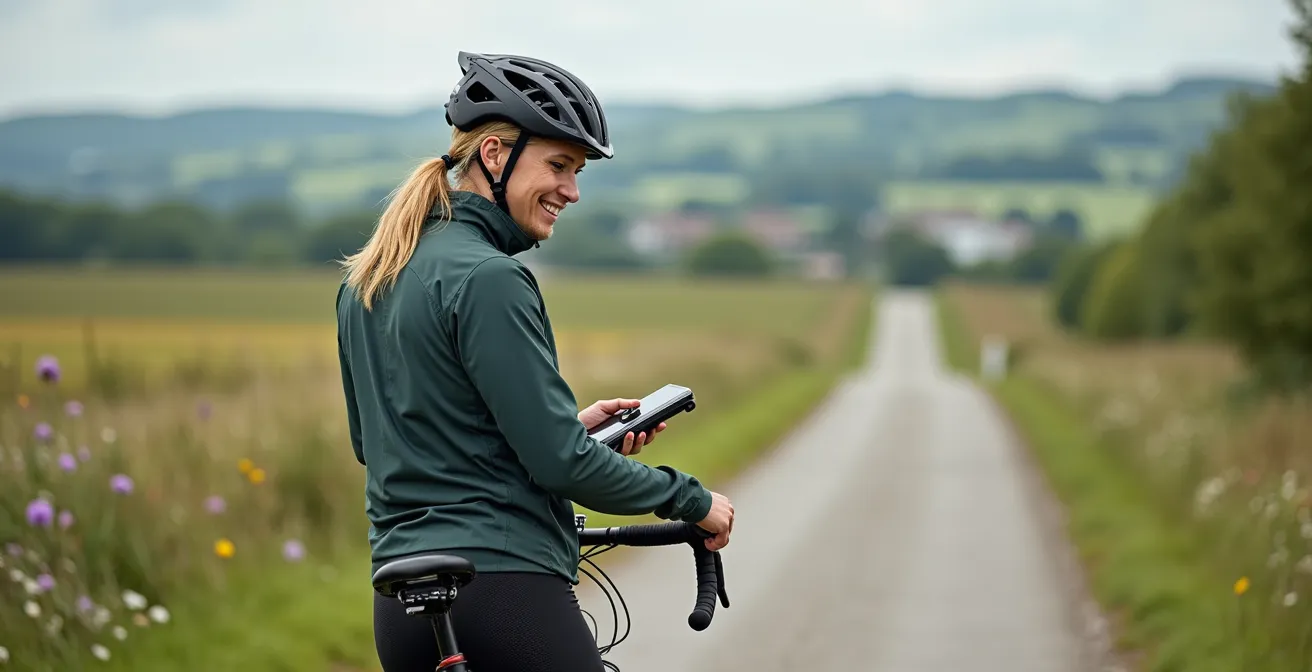
As this image shows, the infrastructure is designed to integrate seamlessly into the landscape, offering a peaceful and immersive experience. In North Devon, the famous Tarka Trail offers a similar opportunity, allowing car-free access from Barnstaple station deep into the heart of the biosphere. Before you visit any sensitive landscape, always ask: can I make this journey by train, bus, or bike? Your choice has a direct impact on the tranquillity and preservation of the area.
The Dog Walking Mistake That Threatens Ground-Nesting Birds
As a nation of dog lovers, we cherish the freedom of walking our companions through the beautiful British countryside. However, one of the most critical—and often invisible—threats to our biosphere’s wildlife comes from off-lead dogs during nesting season. Birds like the skylark, woodlark, and Dartford warbler nest on or near the ground, perfectly camouflaged in the tussocky grass and heathland.
A dog, even with the friendliest of intentions, running through these areas can cause a nesting bird to abandon its eggs or chicks. The threat isn’t just direct disturbance; a dog’s scent trail alone can be enough to lead predators like foxes or crows to a nest. The most sensitive period is legally defined and strictly enforced. Under the Countryside and Rights of Way (CROW) Act 2000, there is a mandatory requirement to keep dogs on a short lead on all open access land from 1 March to 31 July each year.
Sticking to designated footpaths and bridleways is crucial, but observing this ‘on-lead’ rule is the single most important action a dog owner can take to protect our vulnerable bird populations. It’s a small sacrifice for a few months that ensures the next generation of these iconic species can fledge successfully. For off-lead exercise during this period, consider using designated enclosed dog parks, which can be found in many urban areas bordering the biosphere, like Preston Park in Brighton.
Your action plan for protecting ground-nesting birds
- Identify your route: Check if your planned walk is on ‘Open Access Land’ where nesting is likely.
- Check the calendar: From March 1st to July 31st, ensure you have a short, fixed lead (not an extendable one).
- Scan for signage: Always obey local signs, which may indicate particularly sensitive areas for wildlife or livestock.
- Observe behaviour: If you see birds flying up in alarm or making distress calls, you are too close. Calmly and quietly walk away.
- Plan for waste: Always carry poo bags and take the waste home. Scent marking is a real threat.
Supermarket vs Farm Shop: Why Buying Local Protects the Landscape?
What does your lunch have to do with landscape conservation? Everything. A key principle of a UNESCO Biosphere is the connection between people, nature, and the local economy. When you choose to buy your food from a local farm shop or a farmers’ market within the biosphere, you are doing much more than just purchasing a meal; you are making a direct investment in the landscape itself.
Traditional farming practices in areas like Sussex are responsible for creating and maintaining the “patchwork quilt” landscape that visitors love. This includes managing hedgerows that act as wildlife corridors, preserving old orchards that support unique insects and birds, and grazing livestock in a way that promotes wildflower diversity. These small-scale, mixed farms simply cannot compete on price with the vast, industrial monocultures that supply major supermarkets. When you buy from a supermarket, you are often supporting a food system that contributes to biodiversity loss elsewhere, with enormous food miles attached.
The BioCultural Heritage Tourism project, which ran in The Living Coast biosphere, brilliantly demonstrated this link. It helped local businesses showcase how their purchasing decisions support the biosphere’s objectives, creating a virtuous cycle. Tourists visit to see the beautiful landscape, spend money with businesses that source from traditional farms, and that revenue then helps the farmers continue to manage the landscape. Your spending power is a conservation tool.
This table, based on information from The Living Coast’s own analysis, starkly illustrates the difference your choice can make.
| Aspect | Supermarket Supply Chain | Local Farm Shop (Sussex) |
|---|---|---|
| Food Miles | 11,000+ miles (New Zealand imports) | Under 20 miles (local farms) |
| Landscape Impact | Monoculture fields, biodiversity loss | Maintains hedgerows, orchards, wildlife corridors |
| Varieties Sold | Standard commercial varieties | Heritage Sussex apples, native varieties |
| Direct Conservation Funding | None | Supports traditional landscape maintenance |
When to Visit Coastal Reserves to Avoid Getting Cut Off by Tides?
The chalk coastline of the Brighton & Lewes Biosphere is one of its most dramatic features, with towering white cliffs and fascinating rock pools revealed at low tide. However, this beauty comes with a significant and often underestimated danger: the tide. The Bristol Channel has the second-highest tidal range in the world, and while ours isn’t as extreme, the sea can come in astonishingly fast, cutting off access along the undercliff walks between Brighton Marina, Rottingdean, and Saltdean.
Respecting the ‘tidal clock’ is not just a matter of personal safety; it’s also an act of environmental responsibility. Getting stranded necessitates a rescue from the coastguard or RNLI, putting volunteers at risk and using resources that could be deployed elsewhere. Furthermore, scrambling up the soft chalk cliffs to escape a rising tide causes significant erosion, damaging a fragile habitat that is a designated Site of Special Scientific Interest (SSSI).
The only safe way to explore the undercliff areas and rock pools is on a falling tide. You must know the time of the next high tide before you set out and plan to be back at a safe access point at least 3-4 hours before it peaks. Tides move fastest during the middle of their cycle. Rock pooling, a wonderful way to connect with marine life, should only ever be done as the tide is going out, to minimise disturbance to the creatures in the pools. Visiting at low tide ensures you are not trampling sensitive organisms just as the water returns.
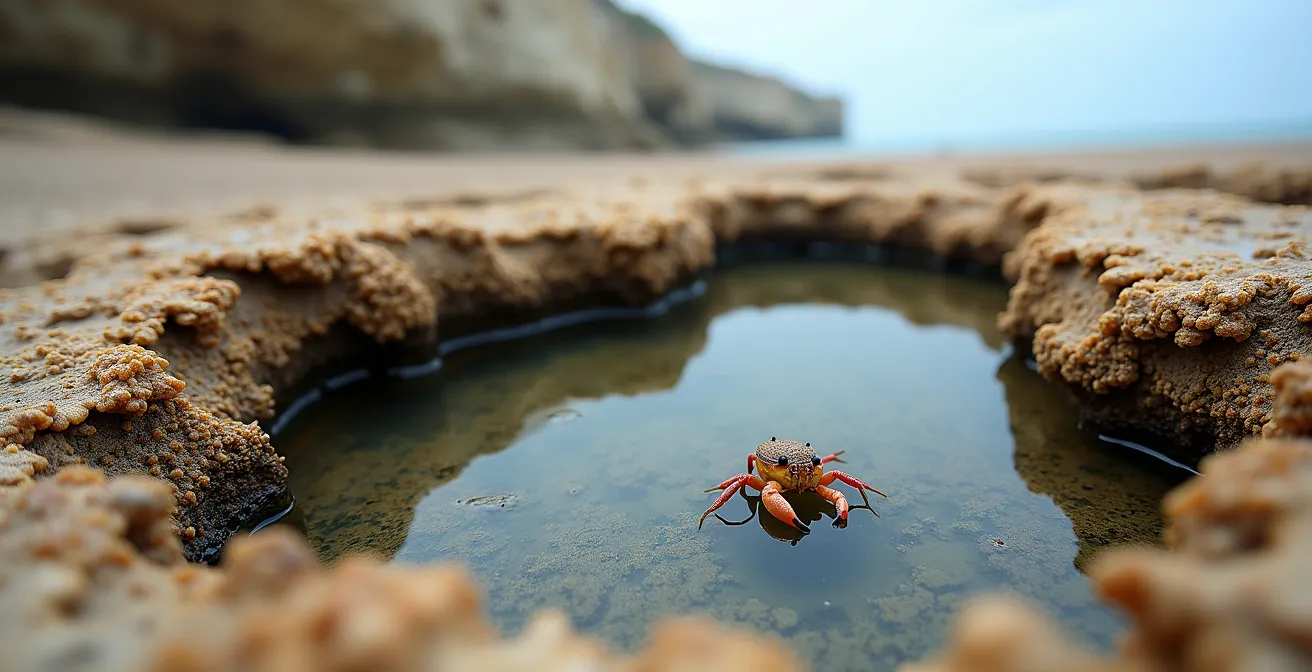
The intricate world of a rock pool is a fragile ecosystem. By planning your visit carefully, you can enjoy this spectacular marine environment without putting yourself or the habitat at risk. Always check a reliable tide times app or website before you even leave your accommodation.
When to Visit Royal Parks to Avoid the Tourist Crowds?
Visitor pressure is a major challenge not just in coastal biospheres but in all popular green spaces across the UK, including London’s famous Royal Parks. The South Downs National Park, for example, receives an estimated 18 million visitors annually, and while parks like Richmond and Hyde Park are designed for people, overcrowding can still lead to path erosion, wildlife disturbance, and a less peaceful experience for everyone.
However, by being strategic with your timing and entry points, you can find tranquillity even in the busiest locations. The key is to think like a local, not a tourist. Most visitors to Richmond Park, for instance, will enter via the main Richmond Gate, creating a bottleneck. By using quieter access points like Kingston or Robin Hood Gate, you can immediately access less-trodden areas.
Timing is everything. The busiest periods are almost always weekend middays. The ‘golden window’ for a peaceful visit is often on a Tuesday or Wednesday afternoon, between 2pm and 4pm. Furthermore, consider the weather. An overcast weekday is not only quieter but often the best time to see wildlife like the deer in Richmond Park, as they are more active in cooler conditions. In Hyde Park, avoid the southern edge near the museums and Knightsbridge, and instead explore the northern paths near Lancaster Gate. By applying this simple, strategic thinking, you minimise your own impact and gain a far more authentic and enjoyable experience of these vital urban oases.
Key takeaways
- True conservation is about understanding the ‘why’ behind the rules, not just following a checklist.
- Your choices as a consumer—from your mode of transport to where you buy your lunch—are powerful conservation tools.
- The goal is to become a ‘regenerative visitor’ who actively contributes to the landscape’s health, rather than just minimising harm.
When to Visit National Parks to Minimise Ecological Disturbance?
The concept of minimising your impact can be taken a step further. Instead of just aiming to ‘do no harm,’ what if your visit could actively benefit the environment? This is the core idea behind ‘regenerative tourism,’ a model being pioneered in places like the South Downs National Park. It shifts the mindset from tourism as a potential problem to the visitor as a potential partner in conservation.
A central part of this is avoiding “honeypot” sites during peak times. These are the famous, heavily-photographed locations (like the Seven Sisters at Birling Gap) that suffer from extreme footfall, leading to severe path erosion and habitat degradation. By choosing a quieter, less-famous alternative, you not only get a more peaceful experience but also spread the economic and environmental load more evenly across the park.
Case Study: The South Downs Regenerative Tourism Model
The South Downs National Park is actively transforming its 18 million annual visitors into conservation allies. Rather than simply asking them to stay on paths, the park authority encourages participation in citizen science projects. Using free mobile apps like iNaturalist (for recording plants and insects) and BirdTrack (for logging bird sightings), visitors’ holiday snaps and observations become valuable data points for biodiversity monitoring. This innovative approach turns a simple walk into a meaningful contribution to the park’s ecological health, embodying the spirit of regenerative tourism.
The best time to visit is often during the ‘ecological shoulder seasons’—late spring (after the critical ground-nesting period) and early autumn. The weather is often pleasant, the crowds have thinned, and the landscape is still rich with colour. The following table offers some suggestions for swapping a honeypot for a hidden gem.
| National Park | Overcrowded Honeypot | Quiet Alternative | Best Low-Impact Season |
|---|---|---|---|
| Lake District | Scafell Pike (Wasdale Head) | Blencathra (Hall’s Fell Ridge) | Late May (post-nesting) |
| Peak District | Mam Tor | Shutlingsloe | Early September |
| South Downs | Seven Sisters (Birling Gap) | Black Cap (behind Lewes) | Mid-week autumn |
Which Lesser-Known UK UNESCO Sites Are Worth a Detour?
The principles we’ve discussed—understanding ecological interconnection, travelling thoughtfully, and supporting local economies—are not exclusive to Brighton & Lewes. They are your passport to responsibly exploring a whole network of incredible UNESCO-designated sites across the UK, many of which are far from the beaten track. Applying this conservationist mindset allows you to discover the unique character of each place while ensuring its protection.
From the rugged coast of the North Devon Biosphere, best explored via the Tarka Trail cycle path, to the vast landscapes of the Galloway & Southern Ayrshire Biosphere in Scotland, where looking for businesses with the ‘Biosphere Certification Mark’ guides you to sustainable choices. In the Scottish Highlands, the Wester Ross Biosphere champions community-led tourism, ensuring your visit directly benefits local people. Each of these sites offers a chance to put your knowledge into practice.
The success of this community-led, conservation-focused approach is proven. Here in Sussex, The Living Coast Biosphere has been so successful in its mission—with projects ranging from urban bee banks to water-protecting rain gardens—that in 2024, its designation was renewed and its area nearly doubled to over 700km². This is a testament to the power of a community, including its visitors, working together to protect and enhance their environment. By choosing to visit these lesser-known sites, and by visiting them with care and understanding, you become part of this positive, global movement.
Your next visit to a UK park or biosphere is an opportunity. It’s a chance to go beyond being a tourist and become a temporary custodian of the landscape. By embracing this conservationist mindset, you don’t just see a place—you become part of its continued story.