
In summary:
- Focus your organic budget on produce with high pesticide loads like strawberries and spinach (nutritional arbitrage).
- Use veg box subscriptions strategically and master food storage to eliminate waste.
- Opt for UK-grown frozen berries in winter for higher nutritional value and lower cost than fresh imports.
- Shop at discount supermarkets like Aldi for the bulk of your organic needs to significantly lower your weekly bill.
- Understand meat certification labels to avoid paying a premium for misleading claims.
For many health-conscious shoppers in the UK, the loyalty to high-quality organic produce from stores like Waitrose or M&S is being tested by relentless food inflation. The weekly shop has become a source of financial stress, pitting a desire for nutritious, clean food against a shrinking budget. The common advice—buy seasonal, cook from scratch—feels inadequate when the checkout total continues to climb. You feel forced to choose between your health principles and your financial stability.
But what if this is a false choice? What if the key to affordable organic eating isn’t about deprivation, but about strategy? The secret lies in thinking less like a consumer and more like a nutritional economist. It’s about understanding where the ‘organic premium’ delivers a real, tangible return on your investment in the form of higher nutrients and lower pesticide exposure, and where it’s simply a costly habit. This isn’t about giving up on quality; it’s about reallocating your resources with precision.
This guide provides a practical framework to achieve just that. We will deconstruct the weekly shop, moving from individual item choices to broader sourcing strategies. We’ll explore the real nutritional value of frozen versus fresh, decode confusing meat labels, and even reveal how to bypass the notorious allotment waiting lists. Prepare to transform your approach and prove that a £50 weekly organic budget is not just possible, but sustainable.
This article breaks down the exact strategies you need to master your organic food budget. The following sections provide a clear roadmap, from specific shopping choices to long-term sourcing solutions.
Summary: Your Guide to Affordable Organic Eating in the UK
- Why You Should Buy Organic Strawberries but Save on Avocados?
- How to Subscribe to Veg Boxes Without Wasting Half the Produce?
- Frozen Berries or Fresh Imports: Which Is Actually More Nutritious in Winter?
- The Storage Mistake That Destroys Nutrients in Your Prepped Salads
- When to Switch from Salads to Root Vegetables to Save Money?
- Tesco Clubcard or Aldi Prices: Which Saves a Family of Four More Weekly?
- Why Supermarket Labels Often Hide the True Journey of Your Meat?
- How to Skip the 5-Year Waiting List for a Council Allotment in Your Area?
Why You Should Buy Organic Strawberries but Save on Avocados?
The foundational principle of eating organic on a budget is nutritional arbitrage. This economic concept means strategically spending your money where it yields the highest return. In food terms, it’s about identifying which foods are most susceptible to pesticide contamination and dedicating your organic budget to them, while saving money on produce where the organic premium offers minimal benefit. Not all fruits and vegetables are created equal when it comes to pesticide absorption.
Foods with thin, edible skins like strawberries, spinach, and grapes consistently top lists of the most contaminated conventional produce. For these items, the organic premium is a worthwhile investment in reducing your exposure to chemical residues. Conversely, produce with thick, inedible skins like avocados, onions, and sweetcorn show very low pesticide levels in their edible portions. Buying these items conventionally is a smart and safe way to stretch your budget without compromising your health. This targeted approach ensures every pound you spend on organic food has the maximum impact.
To implement this, you need a clear priority list for your UK shopping basket. Focus on the most vulnerable items first.
- Priority 1 – Always buy organic: Strawberries, grapes, citrus fruits, spinach
- Priority 2 – Often contaminated: Apples, pears, cherries, soft fruits
- Priority 3 – Consider organic: Tomatoes, leafy greens, imported produce
- Priority 4 – Save money on conventional: Avocados, thick-skinned produce, root vegetables in winter
How to Subscribe to Veg Boxes Without Wasting Half the Produce?
Veg boxes from services like Riverford or Abel & Cole are a cornerstone of affordable organic eating in the UK, offering direct-from-farm produce that often costs less than supermarket equivalents. However, their value is quickly eroded if that beautiful, seasonal produce ends up in the bin. The key to success is treating your veg box delivery not as a random assortment of food, but as a perishable asset portfolio that requires active management. This means having a plan before it even arrives.
The first step is to “triage” your vegetables upon arrival. Separate items that wilt quickly (salad leaves, spinach, herbs) from those with a long shelf life (potatoes, carrots, onions). Use the most perishable items first, within the first 2-3 days. The second step is mastering storage. Leafy greens last longer when washed, thoroughly dried, and stored in a container lined with a paper towel. This small action can extend their life by almost a week, preventing waste and protecting your investment. By implementing a system, you maximise the value of every item.
Case Study: The £44 Weekly Organic Dinner Plan
This approach is proven to work. For example, one UK family successfully fed four people organic dinners for a week using a £22.70 large seasonal vegetable box from Riverford. By adding just £21.60 in extras like meat and pantry staples, their total weekly dinner spend was only £44.30, demonstrating the incredible value a well-managed veg box can provide.
Visualising an organised system can help reinforce these habits. The image below shows how proper storage techniques, such as using glass containers and moisture-absorbing liners, create an environment where fresh produce thrives.
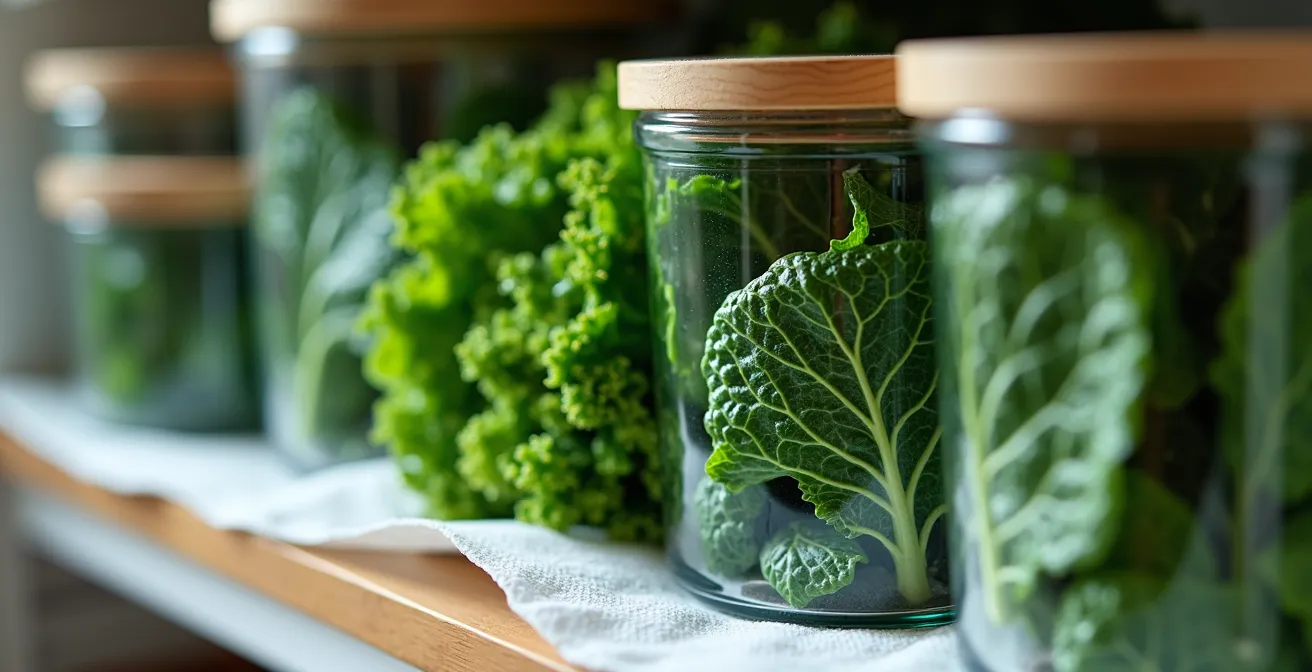
As you can see, this isn’t just about tidiness; it’s a functional system designed to minimise waste and maximise the nutritional value you get from your weekly shop.
Frozen Berries or Fresh Imports: Which Is Actually More Nutritious in Winter?
A nutritional economist looks at the entire supply chain to determine value. During a UK winter, buying fresh organic strawberries flown in from another hemisphere seems like a healthy luxury. In reality, it’s often a poor nutritional and financial decision. The moment produce is picked, its nutrient content, particularly fragile vitamins like Vitamin C, begins to decline. After days of transport and storage, that expensive fresh berry may have significantly less nutritional value than its frozen counterpart.
Organic berries grown in the UK and frozen at the peak of their ripeness lock in the vast majority of their nutrients. This “flash-freezing” process acts as a natural preservative, halting the nutrient degradation that plagues fresh produce during long-distance transit. As the Soil Association notes, “Importing fruit and veg from around the world out of season takes a huge amount of energy. The costs of this are reflected in the price tag of the product you’re buying.” This means you are paying more for a product that is often less nutritious and has a larger carbon footprint.
The following table, based on data from UK organic bodies, clearly illustrates the economic and nutritional case for choosing local frozen options during the off-season.
This comparison highlights the superior value of frozen options in winter, a fact confirmed by an analysis of seasonal food costs by the Soil Association.
| Option | Typical Price (£/100g) | Nutrient Retention | Carbon Footprint |
|---|---|---|---|
| UK Frozen Organic Berries | £0.60-0.80 | 95% vitamin C retained | Low – local processing |
| Fresh Import Organic Berries | £1.50-2.00 | 40-60% vitamin C after transport | High – air freight/shipping |
| UK Stored Apples | £0.30-0.50 | Good if properly stored | Very low – local storage |
The Storage Mistake That Destroys Nutrients in Your Prepped Salads
You’ve spent your budget wisely on beautiful organic salad leaves, but one common mistake can decimate their nutritional value before they even reach your plate: improper storage. The biggest enemy of fresh greens is excess moisture, which accelerates decay and nutrient loss. Simply leaving your salad in the bag it came in is a recipe for a slimy, wasted mess within days. A second, more subtle mistake is storing them next to the wrong neighbours in your fridge.
Many fruits, especially apples, bananas, and stone fruits, release ethylene gas as they ripen. This gas is a ripening agent that can cause sensitive leafy greens to yellow, wilt, and spoil prematurely. Storing your salad leaves in a separate crisper drawer from these ethylene-producing fruits is a simple but critical step in preserving their freshness and crunch. Furthermore, adding dressing to a prepped salad hours before consumption will draw out water and turn crisp leaves into a soggy disappointment.
To protect your investment and ensure you get the full nutritional benefit of your organic greens, a strict storage protocol is essential. The following audit provides a step-by-step process to follow every time you bring salad greens into your home.
Your Salad Preservation Audit: 5 Steps to Lasting Freshness
- Wash & Dry: Immediately after purchase, thoroughly wash and spin-dry your salad leaves to remove field grit and excess water.
- Create a Buffer: Line the bottom of an airtight storage container with a single sheet of paper towel to absorb any residual moisture.
- Provide Airflow: Place the dry leaves loosely in the container. Do not pack them tightly, as this bruises the leaves and traps moisture.
- Isolate from Ethylene: Store the container in a crisper drawer, kept separate from ethylene-producing fruits like apples and bananas.
- Dress Just-in-Time: Only add dressing at the moment of consumption. Use small, portable pots for packed lunches to keep greens crisp.
When to Switch from Salads to Root Vegetables to Save Money?
While salads are a summer staple, clinging to them year-round is an expensive habit that goes against the principle of seasonal eating. As autumn arrives, the cost of delicate salad ingredients rises sharply while their quality often declines. This is the strategic moment to pivot your diet and your budget towards the UK’s seasonal bounty: root vegetables. Carrots, parsnips, potatoes, and squash are not only cheap and abundant in the colder months, but they are also nutritionally dense and incredibly versatile.
This seasonal switch directly combats food waste, a significant drain on household finances. In fact, research shows that UK families throw away between £250 and £400 worth of food annually. A large portion of this waste comes from perishable items like salads. Hardy root vegetables, by contrast, can be stored for weeks or even months in a cool, dark place, giving you far more flexibility and drastically reducing the risk of spoilage. Making a conscious shift from a salad-based diet to one rich in soups, stews, and roasts is one of the single most effective ways to lower your winter food bill while still eating wholesome, organic meals.
This isn’t about giving up fresh foods; it’s about aligning your plate with the seasons. A hearty winter soup made from organic root vegetables offers immense comfort and nutrition for a fraction of the cost of a tired, imported winter salad. By embracing this transition, you tap into produce that is at its cheapest, most flavorful, and most abundant, directly reducing your carbon footprint and saving you money.
Tesco Clubcard or Aldi Prices: Which Saves a Family of Four More Weekly?
For decades, shoppers have been conditioned to believe that supermarket loyalty schemes like the Tesco Clubcard are the primary way to save money. However, in the current inflationary climate, this model is being challenged. A nutritional economist analyses the total basket cost, not just individual “deals”. When you do this, the consistently low base prices at discount supermarkets like Aldi and Lidl often deliver far greater weekly savings than the fluctuating offers at traditional chains, even for organic products.
The business model of discount supermarkets is built on efficiency, a limited product range, and lower overheads, allowing them to maintain low prices across the board. While a Tesco Clubcard might offer a tempting discount on a specific organic item, your total shop—which includes pantry staples, cleaning supplies, and other necessities—is likely to be significantly higher. For families on a tight budget, the predictability of Aldi’s pricing is a powerful tool for financial planning.
The most effective strategy is often a hybrid one: using a discounter for the majority of your shopping and making targeted trips to other supermarkets only for specific items you can’t find elsewhere or that are on a deep discount which genuinely beats the discounter’s price.
Case Study: The 85% Aldi Rule
This strategy is proven effective by real families. As detailed by The Humble Penny, one UK family of four maintains its £50 weekly food budget by sourcing 85% of their shopping from Aldi. They make selective trips to other stores for specific deals and buy staples like bulk rice from specialty ethnic shops, which offer better value than any supermarket. This demonstrates that forgoing traditional loyalty schemes in favour of a low-base-price strategy is the most effective path to major savings.
Why Supermarket Labels Often Hide the True Journey of Your Meat?
Nowhere is the principle of nutritional arbitrage more critical than in the meat aisle. The price of organic meat reflects a significant premium, and consumers deserve to know what they are paying for. Unfortunately, supermarket labels can be a minefield of confusing and sometimes misleading terms. “Free Range” and “Red Tractor” might sound reassuring, but they represent vastly different standards of animal welfare and traceability compared to certified organic labels.
The Red Tractor label is a baseline, assuring that the product is British and meets minimum legal standards. Free Range is a step up, guaranteeing some form of outdoor access. However, the gold standard in the UK is a certification from a body like the Soil Association. This not only guarantees the highest standards of animal welfare—including genuinely free-range lives and a natural diet—but also prohibits the routine use of antibiotics and ensures full farm-to-fork traceability. As the Soil Association points out, this standard also yields a superior product, stating that “Organic milk has around 50 percent more beneficial omega 3 fatty acids”. When you buy Soil Association certified meat or dairy, you are paying for a guarantee of quality, ethics, and nutritional superiority.
To make informed choices, you must understand this hierarchy. The following table breaks down the most common UK certifications, allowing you to see exactly what your money is buying.
| Certification | Animal Welfare Standard | Traceability | Price Premium |
|---|---|---|---|
| Soil Association Organic | Highest – outdoor access, natural behavior | Full farm-to-fork | 40-60% above conventional |
| Pasture for Life | High – 100% grass fed | Very good | 30-40% above conventional |
| Free Range | Good – outdoor access required | Moderate | 20-30% above conventional |
| Red Tractor | Basic UK standards | UK assured only | 5-10% above conventional |
Key takeaways
- Prioritise spending: Use the “Dirty Dozen” and “Clean Fifteen” principle to focus your organic budget on high-contamination produce.
- Embrace the freezer: In winter, UK-grown frozen organic produce is more nutritious and cheaper than fresh imports.
- Change your supermarket: Shift the bulk of your shopping to discounters like Aldi to achieve significant, consistent savings over loyalty card “deals”.
How to Skip the 5-Year Waiting List for a Council Allotment in Your Area?
The ultimate strategy for eating organic on a budget is to grow your own produce. This provides complete control over quality and a near-zero cost for fresh, seasonal food. However, the dream often collides with a harsh reality: council allotment waiting lists in the UK can stretch for five years or more. For someone needing to save money now, this is not a practical solution. But there are ways to “hack” the system and gain access to land almost immediately.
The traditional route is not the only one. A more proactive approach involves leveraging community networks and even old legislation. Many councils have neglected or underused plots, and by directly contacting the allotment officer, you can sometimes identify and claim one. Beyond the council, a thriving ecosystem of sharing platforms and community projects has emerged to connect gardeners with available land. These initiatives offer a way to start growing immediately, bypassing the bureaucratic queue entirely.
A West Sussex family successfully maintains a £25 per person weekly organic food budget through strict meal planning, ensuring everything entering their house has a purpose and absolutely nothing goes to waste.
– The Whole Home, Organic Food on a Budget
This level of budget control is achievable when you combine smart shopping with the unparalleled value of growing your own. Here are several fast-track strategies to find a growing space in your area:
- Contact your local council’s allotment officer to inquire about neglected plots, citing the Small Holdings and Allotments Act 1908, which obliges them to provide land.
- Join a local ‘Lend and Tend’ or similar plot-sharing platform online to find private garden owners offering space.
- Search on social media for groups like “[Your Town] Allotment Share” to find existing plot holders looking for a partner.
- Join your nearest ‘Incredible Edible’ network, which maintains public vegetable beds for anyone to work on and harvest from.
- Register with the Social Farms & Gardens charity to be connected with community garden projects near you.
Adopting an economist’s mindset is the key to unlocking an affordable organic lifestyle. It transforms the weekly shop from a source of anxiety into a strategic exercise in value optimisation. By applying these principles, you can take control of your food budget without compromising on the quality and health benefits you value. The next step is to put this knowledge into practice on your next shopping trip.