Budgeting for Patagonia from the UK feels daunting, but your total cost hinges on a handful of key decisions you make before you even fly.
- Flight routing via Europe, particularly Madrid, can save hundreds over traditional US connections, avoiding extra fees and hassle.
- Renting versus buying gear is a critical choice; renting in Puerto Natales makes sense for shorter treks, while buying in the UK is an investment for frequent adventurers.
- Specialist trekking insurance isn’t just an add-on; it’s a non-negotiable part of your budget, as standard policies often void cover at Patagonian altitudes.
Recommendation: Focus your planning on these high-leverage financial points to unlock major savings and turn your dream trip into an affordable, tangible plan.
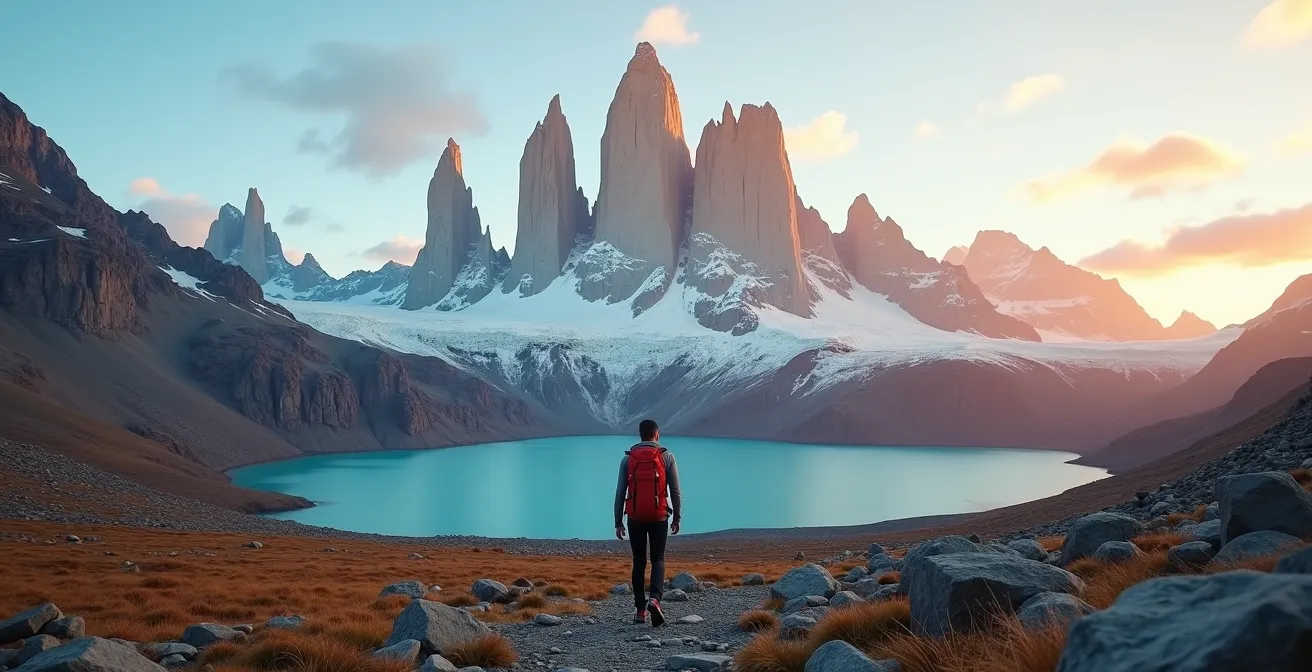
The jagged peaks of Fitz Roy and the granite towers of Torres del Paine are icons of adventure. For many in the UK, a trek in Patagonia is the ultimate ‘bucket list’ trip. But the dream is quickly followed by a daunting reality: the cost. Endless spreadsheets appear, trying to tally flights, gear, food, and permits, often leading to a figure that feels overwhelming and abstract. It’s easy to get lost in the small details, comparing the price of a gas canister in Puerto Natales with one from an online UK retailer.
Most guides will give you a simple list of expenses. They’ll tell you to book flights in advance and pack layers. But this approach misses the bigger picture. The true cost of your Patagonian adventure isn’t determined by a hundred small purchases, but by about five or six major strategic decisions you make right here in England. These are the leverage points that can swing your total budget by thousands of pounds.
This guide is different. We’re not just going to list costs. We’re going to dissect the critical choices you face as a UK-based traveller. We will focus on the ‘why’ behind the big numbers, exploring the financial trade-offs between flight routes, gear strategies, and insurance clauses. Forget meticulously tracking every pound; we’ll show you how to save hundreds by making the right call on a single booking. This is your strategic manual for turning an expensive dream into a well-planned, affordable expedition.
To help you navigate these crucial decisions, this article breaks down the most significant budget leverage points. From flight hacks to understanding the real value of a guided trek, we’ll equip you with the knowledge to build a realistic and efficient budget from the UK.
Summary: Patagonia Trek Budgeting: A Strategic Guide for UK Travellers
- Why Flying via Madrid Often Saves £200 Compared to US Connections?
- Bring Your Own Tent or Rent in Puerto Natales: Which Makes Sense?
- W-Trek Solo or Tour Group: Is the Safety Net Worth £1000 Extra?
- The Cash Mistake Travelers Make at National Park Entrances
- When to Reserve Campsites for Peak Season to Avoid Sleeping Outside?
- Why Driving to St Ives Might Cost More Than Flying to Faro?
- The Insurance Clause That Voids Cover Above 2500 Metres
- How to Prepare for Your First Alpine Trek Living in Flat England?
Why Flying via Madrid Often Saves £200 Compared to US Connections?
The single biggest line item on your budget sheet will be your return flight to Santiago, Chile (SCL). For UK travellers, the default option often seems to be a direct flight or a connection through a major US hub. However, this is often the first and most costly mistake in planning. A strategic look at flight routes reveals a powerful leverage point: flying via Europe, specifically Madrid (MAD), can offer significant savings and fewer administrative headaches.
Connecting through the US involves not only longer layovers but also the mandatory Electronic System for Travel Authorization (ESTA), which adds an extra £17 per person and another layer of paperwork. Furthermore, US airlines can have stricter and more expensive baggage policies for the kind of bulky gear a trekker carries. In contrast, EU connections with airlines like Iberia or LATAM often provide a smoother transit experience. The key is to think of the journey in two parts: the short hop to Europe, and the long-haul leg to South America.
This comparative analysis highlights the clear financial and logistical advantages of the Madrid route. While a direct flight offers speed, it comes at a premium that could fund your on-trek food for a week. The data below shows that a little extra travel time can translate into substantial savings.
| Route | Airlines | Average Cost | Flight Time | Advantages |
|---|---|---|---|---|
| London-Madrid-Santiago | Iberia, LATAM | £465-£600 | 16-18 hours | EU transfers, no ESTA fees |
| London-Santiago Direct | British Airways | £700-£900 | 14.5 hours | Direct, Avios compatible |
| London-US-Santiago | American, United | £650-£850 | 18-22 hours | ESTA £17, stricter baggage |
| London-São Paulo-Santiago | LATAM | £550-£700 | 17-19 hours | Good connections |
Bring Your Own Tent or Rent in Puerto Natales: Which Makes Sense?
After flights, gear is the next major budget consideration. The central question for campers is whether to haul a tent, sleeping bag, and mat all the way from the UK or rent equipment in a hub town like Puerto Natales. There’s no single right answer; the decision is a trade-off between cost, convenience, and quality. Your choice here is a significant leverage point that depends on the length of your trip and your future trekking ambitions.
Renting is an excellent option for those on a shorter trip or trying out multi-day trekking for the first time. It saves you the hassle of carrying bulky items through airports and the upfront cost of buying high-quality gear. A gear rental comparison shows that costs in Puerto Natales range from $15-30 USD per day for a quality tent. For a 5-day trek, this could be around £120, far less than the £400-£600 price tag for a new, lightweight 4-season tent.
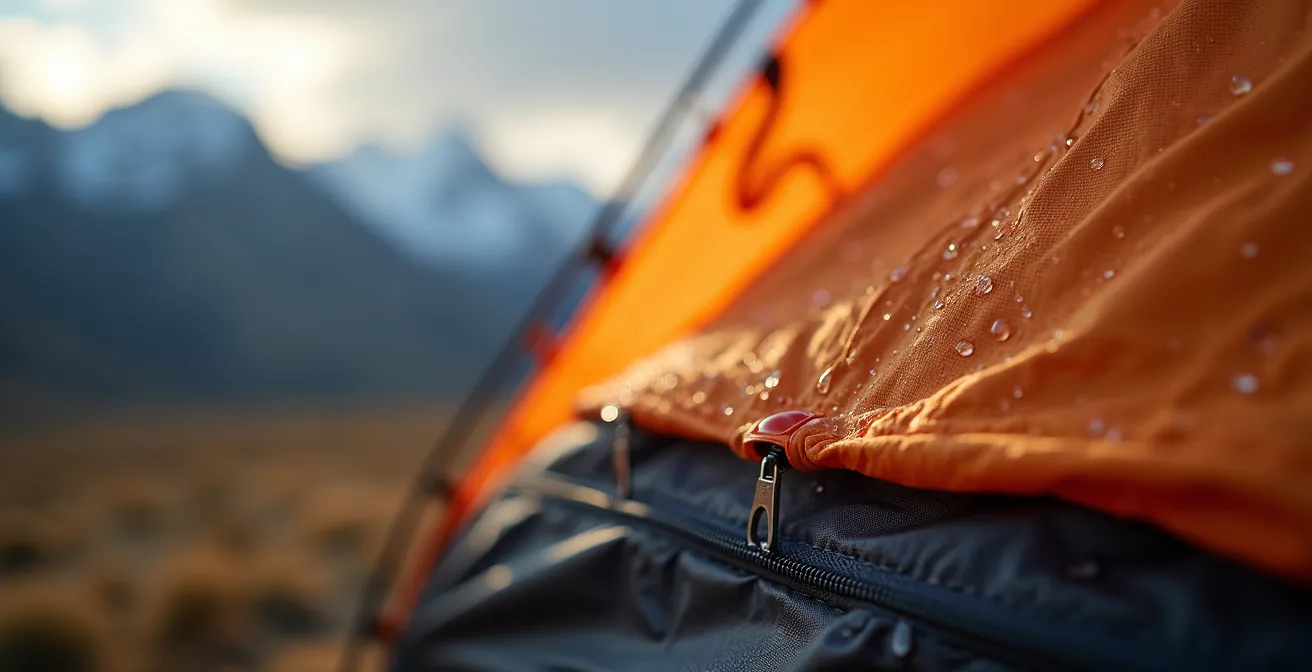
However, for a longer trip or for seasoned hikers who will reuse the gear, bringing your own makes financial sense. You are familiar with your equipment, you know its condition, and the cost is amortised over multiple adventures. A clever hybrid strategy also exists, proving that local knowledge can trump any spreadsheet.
Case Study: The British Hiker’s Hostel Gear-Stash Strategy
A UK hiker planning a long-term trip discovered a valuable resource at the Last Hope Hostel in Puerto Natales. The owner maintains a large collection of hiking and camping gear left behind by previous travellers. Guests are often able to borrow high-quality tents, sleeping bags, and other essentials for free. This ‘gear library’ strategy completely eliminated rental costs and the need to transport bulky equipment from the UK, representing a huge, unplanned budget saving.
W-Trek Solo or Tour Group: Is the Safety Net Worth £1000 Extra?
One of the most significant forks in the road for any prospective W-Trekker is the choice between going it alone or joining a guided tour. This decision has the single largest impact on your on-the-ground budget, often creating a difference of over £1000. It’s easy to see this purely as a cost-saving measure, but it’s more accurately framed as deciding how much you are willing to pay for convenience, safety, and enriched experience.
The numbers are stark. A cost analysis reveals that tour companies charge around $1,600 USD for a 5-day guided W Trek, which includes a guide, accommodation, most meals, and transport. In contrast, experienced independent hikers can complete the same trek for approximately £330 GBP ($430 USD) by booking their own campsites and providing their own food. The £1000+ difference is the price of the “safety net” – a pre-arranged, hassle-free experience where logistics are handled for you.
For first-time trekkers, those short on planning time, or solo travellers seeking company, this premium can be well worth it. A guide provides not just navigation but also peace of mind. However, the value extends beyond just safety, offering a deeper connection to the environment. As the experts at Swoop Patagonia note, it’s the intangible knowledge that often leaves the biggest impression.
While safety and navigation are an important part of what a guide offers, our customers always talk about the knowledge of wildlife, history, geography and culture that their guides brought to the trek
– Swoop Patagonia, Swoop Patagonia Trek Analysis
Ultimately, this isn’t about cheap versus expensive. It’s about a value judgment. Do you prioritise autonomy and budget efficiency, or are you willing to invest in expertise and logistical support? There is no wrong answer, but making a conscious choice is key.
The Cash Mistake Travelers Make at National Park Entrances
In an age of contactless payments and UK fintech cards like Monzo and Revolut, it’s tempting to assume you can travel through Patagonia with just a piece of plastic. This is a critical error. While cards are useful in larger towns like Puerto Natales or El Calafate, much of Patagonia’s trekking infrastructure operates on a cash-only basis. Relying solely on cards is the single biggest financial mistake a traveller can make, potentially leaving you unable to pay for accommodation, transport, or even park entry.
The entrance to Torres del Paine National Park is a prime example. While booking online is encouraged, on-the-day payments can be complex, and you should not assume card facilities will be working. The current park fees show the cost for foreigners is $32,400 CLP (about $35 USD or £28) for the 2025/26 season. You must have a reliable way to pay this. Many of the trail-side *refugios* (mountain lodges) and campsites also require cash for meals, drinks, or last-minute accommodation.

Therefore, a strategic cash plan is not just advisable; it’s essential. This doesn’t mean carrying thousands of pounds in a money belt. It means having a diversified portfolio of currencies and payment methods. A smart approach combines the low fees of UK fintech cards for ATM withdrawals in towns with a pre-prepared stash of cash for the trail.
For UK travellers, the best practice is a multi-layered strategy:
- Order a supply of crisp, new US dollars from your UK bank before you leave. USD is widely accepted as a backup and is easy to exchange.
- Upon arrival in Chile or Argentina, use a fee-free card (like Revolut or Monzo, within their limits) to withdraw a good amount of local currency (Chilean Pesos and Argentine Pesos).
- Split your cash between your daypack and main pack as an emergency measure.
- Never pass up an opportunity to use a working ATM in a town, as they can be unreliable in more remote areas.
When to Reserve Campsites for Peak Season to Avoid Sleeping Outside?
Patagonia’s main trekking season is short and popular, running from December to February. This popularity has a direct and critical impact on your budget and itinerary: you can no longer simply show up and expect to find a place to sleep. The freedom of spontaneous travel in Torres del Paine or around El Chaltén is largely a thing of the past. Failure to book accommodation far in advance will, at best, force you into expensive last-minute options and, at worst, leave you without a legal place to camp.
The booking systems for the national parks are fragmented, with campsites managed by different private and public bodies (CONAF, Vertice, and Las Torres). This makes planning a logistical challenge that requires precision and, most importantly, timing. General booking data confirms that due to the explosion in popularity, you must secure your spots months ahead of your travel dates. This is not a suggestion; it is a mandatory step for anyone planning to trek during the peak summer months.
How far in advance is necessary? For UK travellers planning a trip around the Christmas holidays or in January/February, the window is even tighter. Real-world reports from fellow hikers provide the most valuable insight. Anecdotal evidence suggests a minimum of six months is required. One British traveller aiming for a January trek reported that they had to book all their campsites at the end of the preceding June to secure their preferred dates on the W-Trek. Waiting until autumn would mean finding no availability at all.
This means your entire trip’s structure must be locked in half a year before you fly. This is a crucial budgeting consideration, as it removes flexibility and requires upfront payments for campsite reservations. The “cost” of not booking early isn’t just financial; it’s the potential failure of the entire trip.
Why Driving to St Ives Might Cost More Than Flying to Faro?
This question seems out of place when planning a trip to the other side of the world, but it contains a vital budgeting lesson for any UK-based adventurer. It’s a lesson in understanding the Total Cost of Adventure. On the surface, a holiday in Cornwall seems infinitely cheaper than one in Portugal. There are no flights, no currency exchange, no language barrier. But when you add up the ‘hidden’ costs – the spiralling price of fuel for a 600-mile round trip from London, the notoriously high cost of summer accommodation in St Ives, the price of eating out – the “cheaper” option can surprisingly approach the cost of an all-inclusive package deal to the Algarve.
The principle is directly applicable to your Patagonia budget. It’s easy to make choices that seem to save money upfront but result in higher costs down the line. For example, opting for a cheaper, less waterproof jacket from a high-street store instead of investing in proven GORE-TEX from a specialist UK outdoor shop. The initial saving of £150 feels good. But when that jacket fails in a ferocious Patagonian storm, forcing you to abandon a day’s trek and pay for an unscheduled night in an expensive *refugio* (£80), the false economy becomes painfully clear.
Similarly, skimping on training hikes in the UK to save on fuel or train fares can lead to a lack of fitness on the trail. This could result in needing to cut the trek short, invalidating the hundreds or thousands of pounds already spent on flights and permits. The Total Cost of Adventure forces you to ask: what is the potential downstream cost of this “saving” I’m making now? For a trip as significant as Patagonia, investing properly in the UK pre-cost (quality gear, robust training, proper insurance) is the most effective way to protect your total investment.
The Insurance Clause That Voids Cover Above 2500 Metres
For many UK travellers, travel insurance is a box-ticking exercise, often purchased as a cheap annual policy. For a Patagonian trek, this is a dangerously complacent approach. Most standard travel insurance policies contain a critical exclusion clause that is easy to overlook: they do not cover trekking activities above a certain altitude, typically between 2,000 and 2,500 metres. Given that many key passes and viewpoints in Patagonia, like the John Gardner Pass on the ‘O’ Circuit (1,200m) are lower, some might feel safe. However, many treks can easily exceed this, and the risk is not worth taking. Relying on a standard policy is effectively travelling without insurance.
You must invest in a specialist trekking policy. This is a non-negotiable leverage point in your budget. While it costs more than a standard policy, it provides the two things that really matter: cover for high-altitude trekking and, most importantly, helicopter search and rescue. The cost of a mountain rescue can be astronomical, running into tens of thousands of pounds. As data from a Go Compare trekking insurance guide reveals, the annual cost of a specialist policy is a fraction of that risk. The consequences of being uninsured in an emergency are life-altering.
The table below, adapted from UK market analysis, clearly shows the difference between standard and specialist cover. For a Patagonia trek, you should only be considering providers in the latter categories.
| Insurer | Standard Altitude Limit | With Add-on | Helicopter Rescue | Annual Cost |
|---|---|---|---|---|
| Standard UK Policies | 2,000-2,500m | N/A | Not covered | £30-60 |
| World Nomads | Included to 4,500m | 6,000m max | Included | £150-250 |
| BMC Travel Insurance | 4,500m | 7,000m | Included | £200-300 |
| TrueTraveller | 3,000m | 6,000m | Included | £120-200 |
Before you go, ensure you have a robust documentation strategy. In the event of an incident, having immediate access to your policy details is crucial:
- Take screenshots of your policy summary, including the policy number and 24-hour emergency assistance phone number. Save them to your phone.
- Email the full policy document to yourself and to an emergency contact back in the UK.
- Get written statements, names, and contact details from any guides or witnesses immediately following any incident.
Key Takeaways
- Your total Patagonia cost is controlled by a few key decisions made in the UK, not by minor on-the-ground expenses.
- Strategic flight booking (via Madrid), smart gear choices (rent vs. buy), and conscious tour selection (solo vs. guided) are your biggest financial leverage points.
- Specialist, high-altitude trekking insurance and a well-planned cash strategy are non-negotiable components of a safe and successful trip budget.
How to Prepare for Your First Alpine Trek Living in Flat England?
Physical preparation is a crucial, yet often underestimated, part of your ‘pre-cost’ budget. Arriving in Patagonia without the required fitness is a surefire way to waste the thousands of pounds you’ve spent, as you may have to cut your trek short. For those of us living in the predominantly flat landscapes of England, preparing for the relentless ascents and descents of the Andes requires a dedicated and creative training plan. You cannot simply rely on a weekend stroll to get you ready.
The goal is to simulate Patagonian conditions as best you can. This means two things: building cardiovascular endurance and strengthening your legs and back for carrying a heavy pack over consecutive days. This involves a significant investment of time and can also have associated costs, such as gym memberships, fuel for driving to national parks, and train tickets. It’s also the time to test your gear rigorously. Discovering your new boots give you blisters on a wet weekend in the Brecon Beacons is far preferable to finding out on day one of the W-Trek. The cost of not testing gear is real; gear investment data shows that UK trekkers spent an average of $104 on replacement items *during* their trip, a cost that could be avoided with proper prep.
Your training should be a structured programme that gradually increases in intensity. It’s not about one epic hike, but about consistent, progressive effort. The following plan provides a template for getting ‘Patagonia-ready’ from anywhere in the UK.
Your UK-Based Patagonia Training Plan
- Weeks 1-4: Build a solid base. Focus on cardiovascular fitness with activities like running, cycling, and sessions on a Stairmaster, ideally carrying a 10kg pack to get your back and shoulders conditioned.
- Weeks 5-8: Introduce weekend hikes. Head to the hilliest areas near you, like the Peak District, South Downs, or Chilterns. Hike for 5-6 hours carrying your full expected pack weight.
- Weeks 9-12: Go for a multi-day trek. This is the most critical phase. Plan a 2-3 day trip in a mountainous UK region like Snowdonia, the Lake District, or the Scottish Highlands to simulate back-to-back trekking days.
- Weeks 13-16: Test your gear in adverse conditions. Use this time to do a challenging hike in the worst possible UK weather you can find. A wet and windy weekend in the Brecon Beacons is perfect for testing the real-world performance of your waterproofs.
- Final Month: Focus on ascent training. For London-based hikers, this means repeat ascents of hills like Box Hill in Surrey (aim for 5-6 full ascents in a session). For others, find the biggest hill nearby and do laps.
By focusing on these strategic leverage points, you transform the daunting task of budgeting for Patagonia into a series of manageable, high-impact decisions. A well-planned trip is not only more affordable but also safer and more enjoyable. Start applying these principles today to build your own realistic pathway to the Patagonian wilderness.