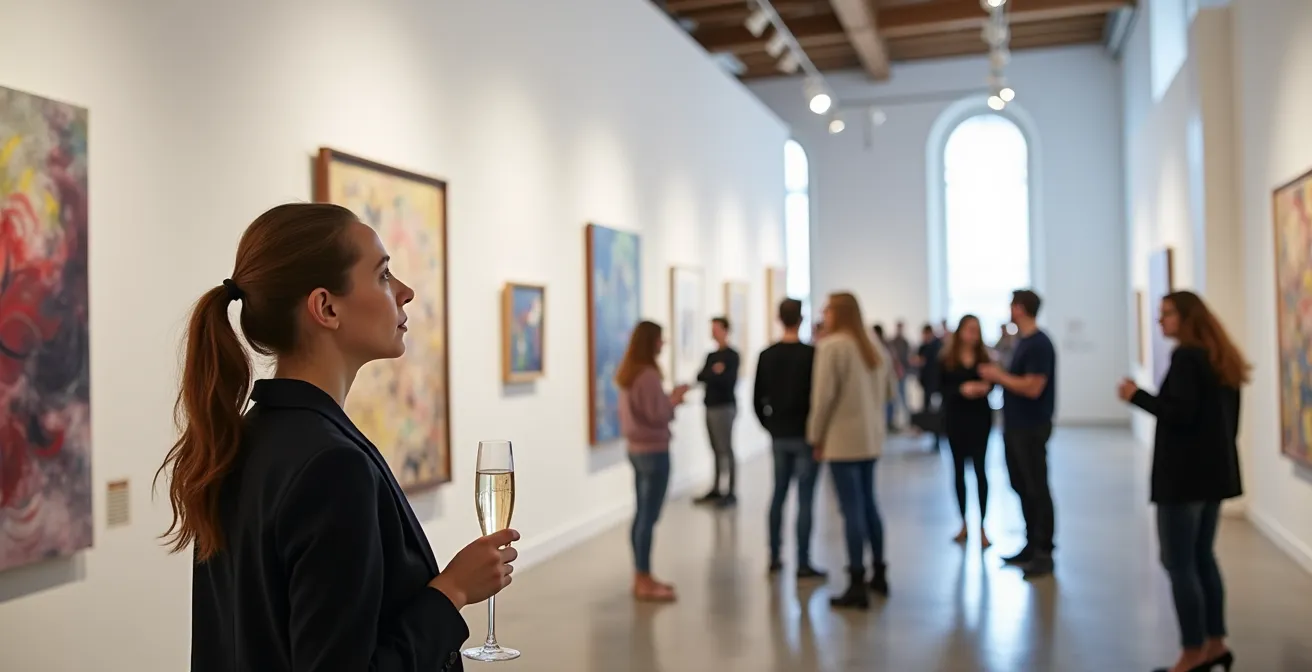
Acquiring art from London’s degree shows isn’t just about finding decoration; it’s a strategic hunt for the art world’s future stars.
- Success lies in decoding “value signals”—technical skill, material quality, and artist ambition—that go beyond initial aesthetic appeal.
- True investment value is secured through diligent post-purchase care, including professional framing, specialist insurance, and meticulous documentation.
Recommendation: To find truly exceptional works, shift your mindset from a simple buyer to a discerning talent scout who understands the entire lifecycle of an art asset.
For many aspiring collectors in England, the world of original art can feel impenetrable. Galleries present polished works with price tags to match, leaving those with a keen eye but a limited budget on the sidelines. The common advice is to visit the summer degree shows, a vibrant explosion of creativity from the UK’s top art schools. While this is a great starting point, simply showing up and “buying what you love” is more of a lottery than a strategy, especially if you harbour hopes of your purchase appreciating in value.
The real opportunity lies in shifting your perspective. Instead of acting like a shopper, you must learn to think like a talent scout. This means looking beyond the immediate visual appeal of a piece and learning to identify the subtle but crucial signals of future value. It’s a discipline that involves evaluating an artist’s technique, understanding their career ambitions, and recognising that your responsibility as a collector begins, not ends, at the moment of purchase.
But what if the secret to a great art investment wasn’t just in the artist’s studio, but in your own approach? The key is to transform from a passive buyer into an active investor who understands that provenance, preservation, and even tax law are as much a part of the artwork’s story as the paint on the canvas. This guide will equip you with that strategic mindset, turning your visit to a degree show from a casual day out into a calculated and rewarding hunt for the next generation of British artistic talent.
This article provides a complete framework for your talent-scouting mission, from identifying the best hunting grounds to securing and protecting your future asset. The following sections break down each critical step of the process.
In this Guide: Spotting and Securing Future Art Assets
- RCA or Goldsmiths: When Are the Best Bargains Available?
- Technique or Hype: What Signals Future Value in a Student Work?
- Why a Bad Frame Can Ruin a £500 Painting?
- Does Your Contents Insurance Cover Fine Art Accidental Damage?
- Capital Gains Tax: Do You Pay if You Sell a Painting for Profit?
- NFT or Certificate of Authenticity: Which Guarantee Holds Value in 2025?
- How to Add Personality to a Grey Suit Without Looking Unprofessional?
- Why Bronze Statues Turn Green and How to Maintain Them?
RCA or Goldsmiths: When Are the Best Bargains Available?
The first rule of talent scouting is knowing where and when to look. London’s degree show season, running from May to July, is your primary hunting ground. However, not all shows are created equal, and timing is everything. The most sought-after pieces are often sold during the exclusive ‘Private View’ evenings, typically held on a Thursday from 6pm to 9pm, before the doors open to the general public. Gaining access to these events gives you the first pick and a crucial advantage.
Key institutions like Chelsea College of Arts often schedule their undergraduate shows in mid-June, with postgraduate exhibitions following in early July. For instance, in 2025, Chelsea’s undergraduate show is expected around June 12-20, with the postgraduate show from July 7-12. According to a comprehensive guide by Artlyst, Goldsmiths often follows a similar pattern with a BA show in late June and an MFA show in mid-July. This calendar intelligence allows you to strategically plan your visits and prioritise the artists and institutions that align with your collecting goals.
While the Royal College of Art (RCA) is a global powerhouse, don’t overlook Goldsmiths. Its legacy is formidable; a study of its alumni reveals that seven Turner Prize winners and a quarter of all shortlisted artists studied there. This institutional prestige is a powerful early indicator of an artist’s potential career trajectory. The “bargain” isn’t just a low price; it’s acquiring work from an environment with a proven track record of producing world-class talent before the wider market takes notice.
Technique or Hype: What Signals Future Value in a Student Work?
Once you’re inside the degree show, how do you separate the one-hit wonder from the artist with long-term potential? This is where your role as a talent scout truly begins. While conceptual “hype” can generate buzz, enduring value is almost always anchored in technical mastery and material quality. Look closely at the work. Is the canvas high-quality linen or cheap cotton? Is the paint professional-grade, showing depth and texture, or is it thin and flat? An artist who invests in quality materials signals a serious commitment to their craft.
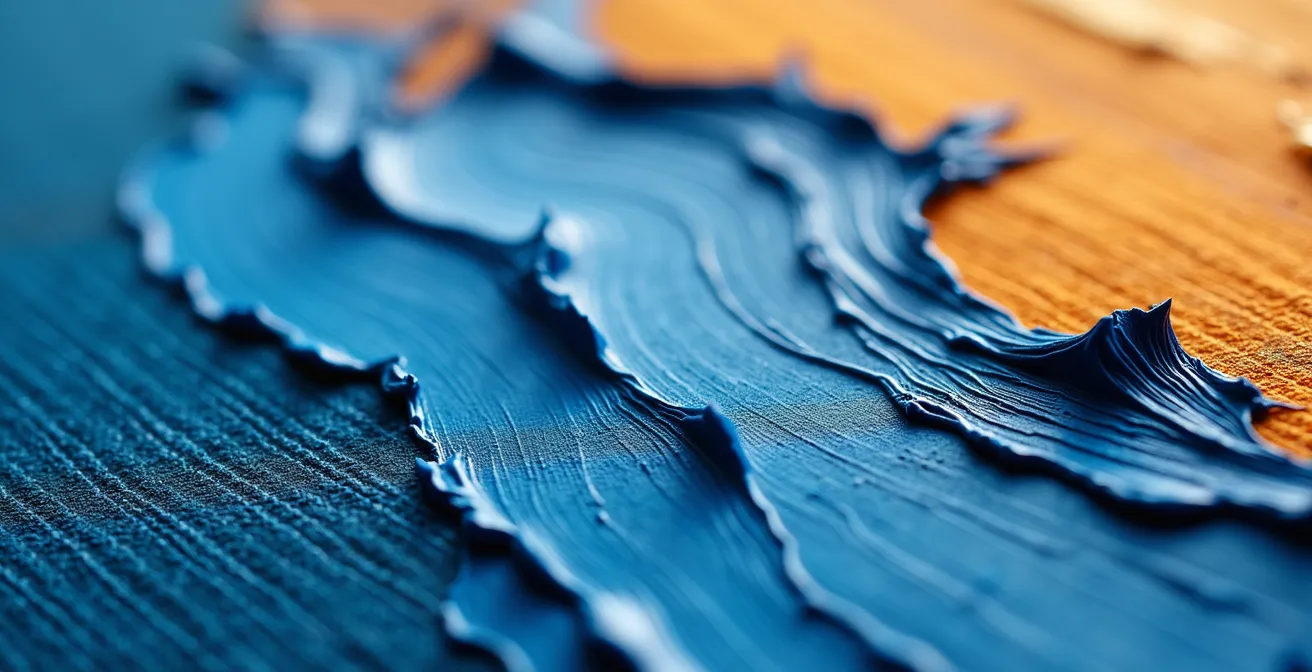
As the image above demonstrates, the physical substance of an artwork—the weave of the canvas, the thickness of the paint—is a tangible value signal. But institutional context is just as important. Different schools foster different strengths. As the Goldsmiths, University of London, programme description states, their postgraduate course has been described as one of the most influential MFA programmes in the world, known for its conceptual rigour and its legacy in the Young British Artists (YBA) movement. In contrast, the RCA, which has held the top global ranking for a decade, is often associated with impeccable technical execution and a powerful professional network.
This table, summarising key indicators, helps to clarify the distinction:
| Institution | Global Ranking | Graduate Success Rate | Key Investment Signal |
|---|---|---|---|
| Royal College of Art | 1st for 10 consecutive years | 90% positive career impact | Technical mastery, established network |
| Goldsmiths | Top 25 globally | 7 Turner Prize winners | Conceptual innovation, YBA legacy |
| Central Saint Martins | Top 5 globally | High fashion/design crossover | Commercial viability |
An astute collector learns to weigh these factors. A conceptually brilliant piece from a Goldsmiths student might have huge potential, while a technically flawless painting from an RCA graduate might be a safer bet. Your goal is to find the artist who combines both: a compelling idea executed with undeniable skill.
Why a Bad Frame Can Ruin a £500 Painting?
You’ve found the perfect piece and negotiated a price. The hunt is over, right? Wrong. The moment of purchase marks the beginning of your role as a custodian. One of the most common and costly mistakes a new collector makes is underestimating the importance of professional framing. A cheap, off-the-shelf frame doesn’t just look unprofessional; it can actively damage your investment.
Framing is not merely decoration; it is preservation. A professional framer uses archival-quality, acid-free materials that protect the artwork from discoloration and environmental damage. More importantly, they will recommend using UV-filtering museum glass. This specialised glass is essential to prevent the colours in your painting from fading over time, especially in a sunlit home. A faded artwork is a devalued artwork, plain and simple. While professional handling at fairs, which includes wrapping and delivery services, is a great start, that standard must be maintained.
As a rule of thumb, you should budget a minimum of 30-40% of the artwork’s purchase price for quality framing. For a £500 painting, that means allocating £150-£200 for a frame that will protect and enhance its value. It might seem like a significant extra cost, but it’s a vital investment in the piece’s longevity. It’s also crucial to document the framing specifications for your records. Finally, if the artist has designed a specific frame for the piece, never alter it. The artist’s frame is considered an integral part of the artwork, and removing it can severely diminish its authenticity and value.
Does Your Contents Insurance Cover Fine Art Accidental Damage?
Alongside preservation, protection is a cornerstone of responsible art ownership. Many new collectors assume their standard home contents insurance will cover their new purchase. This is a dangerous assumption. Most UK home policies have a low single-item limit, often around £1,500, and may not cover accidental damage or in-transit damage from the degree show to your home. Relying on it for fine art is a significant risk.

As soon as your collection’s total value approaches £10,000, or a single piece exceeds the standard policy limit, it’s time to consider specialist art insurance from providers like Hiscox or AXA Art. These policies are designed for art assets and offer broader coverage, including accidental damage, theft, and depreciation in value following a repair. Furthermore, they understand the art world; most standard home policies, for example, do not cover artwork during transport, a critical gap when you’re bringing a piece home from a show.
To make any claim, or even to secure a policy, meticulous documentation is non-negotiable. From the moment you buy, you must build your provenance chain. This includes the original purchase receipt with the artist’s name and artwork title, a photograph of the Certificate of Authenticity, and a photo of the work displayed in your home as proof of possession. You should notify your insurer immediately of any new high-value acquisitions to ensure they are covered. This disciplined approach to paperwork is what separates a casual buyer from a serious collector.
Capital Gains Tax: Do You Pay if You Sell a Painting for Profit?
Viewing art as an investment means considering the potential for future sale and, consequently, the tax implications. For collectors in the UK, the key legislation to understand is Capital Gains Tax (CGT), specifically the “chattels exemption.” A ‘chattel’ is a legal term for a tangible, movable possession, which includes paintings and sculptures. This exemption is a significant advantage for collectors of affordable art.
Under current UK tax law, any artwork you sell for less than £6,000 is completely exempt from Capital Gains Tax. This means if you buy a painting for £500 and sell it five years later for £5,900, the entire £5,400 profit is yours to keep, tax-free. This rule makes the sub-£6,000 market particularly attractive for new investors. It’s a clear financial incentive to focus on spotting talent at the emerging level, where purchase and potential sale prices are likely to fall within this bracket.
However, the moment a piece is sold for £6,000 or more, the rules change and the gain becomes potentially taxable. It’s also important to be aware of the Artist’s Resale Right (ARR), which entitles the original artist to a royalty (typically 4%) if the piece is resold by an art market professional for more than €1,000. This is not a tax, but a payment back to the artist whose career you have helped build.
This table illustrates the different scenarios:
| Purchase Price | Sale Price | Gross Profit | CGT Status | ARR Payment |
|---|---|---|---|---|
| £500 | £5,900 | £5,400 | Exempt (under £6k) | 4% to artist |
| £500 | £7,000 | £6,500 | Taxable gain | 4% to artist |
| £2,000 | £15,000 | £13,000 | Taxable gain | 4% capped at €12,500 |
This tax-advantaged threshold is a compelling reason to focus your talent-scouting efforts on the affordable end of the market, where the financial rewards of a successful find are amplified.
NFT or Certificate of Authenticity: Which Guarantee Holds Value in 2025?
In a world of digital hype, it can be tempting to see new technologies like NFTs as the future of art provenance. However, for the physical, emerging art market, the traditional Certificate of Authenticity (CoA) remains the gold standard. While the NFT market has its place, its volatility and the technical barrier to entry make it less relevant for the typical degree show purchase. A solid, well-documented paper trail is far more valuable in this context.
A CoA is more than just a piece of paper; it is the first and most critical link in the artwork’s provenance chain. It is the legal proof that the work is genuine, created by the named artist. Without it, the artwork’s value can be questioned, making future resale difficult, if not impossible. A weak or incomplete CoA is a major red flag. It suggests an artist is not yet thinking professionally about their career or the long-term life of their work.
For a CoA to be robust, it must contain specific, non-negotiable information. A serious collector knows what to look for and isn’t afraid to ask an artist to provide a more detailed certificate if the one offered is lacking. This act of due diligence not only protects your investment but also signals to the artist that you are a knowledgeable buyer.
Your Checklist for a Valid Certificate of Authenticity
- Artist’s Full Name & Signature: Verify it includes the artist’s full legal name and an original, wet-ink signature, not a printed one.
- Complete Artwork Details: Check for the work’s title, exact dimensions, the medium used (e.g., “oil on linen”), and the year of creation.
- Edition Numbers: For prints or photographs, ensure it specifies the edition number (e.g., ‘3/25’) to confirm it’s a limited, not open, edition.
- Photographic Provenance: Take a photo of the CoA alongside the artwork at the degree show. This creates a time-stamped visual link between the document and the piece.
- Digital Backup: Immediately scan or photograph the CoA and store it securely with your digital purchase receipt. Paper gets lost; backups are essential.
How to Add Personality to a Grey Suit Without Looking Unprofessional?
The question of what to wear to a private view might seem trivial, but in the nuanced world of art collecting, it’s a form of communication. The goal is not to dress like a corporate raider in a grey suit, nor a penniless student. The savvy collector adopts a look of creative professionalism. It signals that you are serious, knowledgeable, and have the financial means to purchase, but that you also belong in this creative environment.
Think smart but not stuffy: a well-cut jacket or blazer over a designer t-shirt, quality leather shoes you can comfortably stand in for hours, and a tote bag large enough for catalogues and price lists. This “uniform” bridges the gap between the corporate and creative worlds, showing respect for both the art and the business of art. It’s about projecting an image of someone who is there to do more than just drink free wine; you are there to scout talent.
This careful self-presentation should be paired with an equally thoughtful approach to conversation. The questions you ask an artist can instantly separate you from the crowd. Avoid generic compliments and instead use conversation starters that demonstrate genuine interest and market awareness. This is a crucial part of your talent-scouting toolkit, helping you gauge an artist’s ambition, intellectual rigour, and career-mindedness. A student with clear, confident answers about their future is often a better investment than a more reticent peer.
Asking questions like, ‘Which London galleries do you feel your work aligns with?’ shows you’re thinking about their market placement. Inquiring, ‘What are your plans for your first year post-graduation?’ demonstrates an interest in their long-term career. Discussing their material choices or the tutors who influenced them reveals a deeper, more serious technical and historical interest. This level of engagement is how you build a rapport and gain insights that other buyers will miss.
Key Takeaways
- Strategic timing is paramount; prioritize private view evenings at top institutions like RCA and Goldsmiths to get first choice of the most promising work.
- Future value is signalled by tangible factors like technical skill, material quality, and the artist’s career ambition, not just by conceptual hype.
- An art purchase is an asset that requires diligent care; professional framing, specialist insurance, and meticulous documentation are non-negotiable for protecting its long-term value.
Why Bronze Statues Turn Green and How to Maintain Them?
While you may be focused on buying a painting, a truly savvy collector understands the importance of materiality across all media. The question of why bronze turns green (a process called patination) is a perfect case study. It highlights a critical aspect of talent scouting: understanding the physical nature of an artwork and its long-term care requirements. An artist’s choice of material, and their skill in handling it, is a powerful value signal.
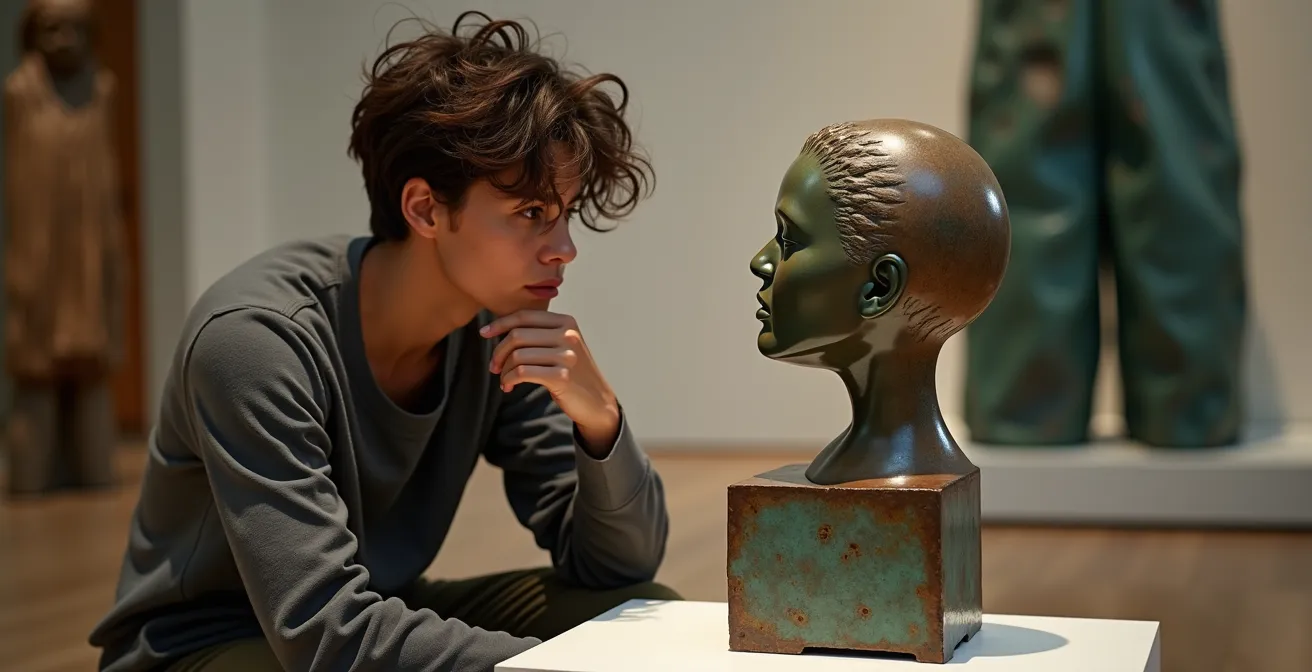
Whether a sculpture is foundry-cast bronze or “cold-cast” resin, for example, has enormous implications for its value, weight, and durability. An artist who can intelligently discuss their material choices—why they chose bronze over steel, or a specific ceramic glaze for its unique properties—is demonstrating a depth of practice that goes beyond surface aesthetics. This knowledge is your responsibility to acquire as well. A plaster sculpture must be kept away from all moisture, while a bronze piece may require an annual wax application to maintain its intended patina.
Failing to understand these needs can lead to the deterioration of your asset. If you buy a beautiful mixed-media piece without asking for care instructions, you risk its value plummeting due to improper handling. This is why engaging with the artist about their process is so vital. It’s not just a pleasant chat; it’s a crucial part of your due diligence. Your understanding of the medium proves you are a custodian who will honour the integrity of the work for years to come, which can even influence an artist’s decision to sell to you over someone else.
Armed with this strategic framework, your next visit to a degree show can be more than a viewing—it can be your first confident step into the world of art investment. Start scouting, engage with artists, and build a collection that is not only beautiful but has the potential to grow in value for years to come.
Frequently Asked Questions about Buying Sculpture
How can I tell if a bronze is foundry-cast or cold-cast resin?
Foundry-cast bronze is significantly heavier, feels cold to the touch, and will produce a clear ringing sound when tapped gently. Cold-cast resin (bronze powder mixed with resin) is much lighter, feels warmer or room temperature, and makes a dull thud. The price difference can be tenfold or more, so this is a crucial distinction.
What special considerations apply to transporting ceramic sculptures?
Ceramics are extremely fragile and require specialist handling. They should be double-boxed with at least a two-inch layer of bubble wrap or foam padding between the inner and outer box. Avoid any temperature extremes during transport, as this can cause cracking. For any ceramic piece valued over £1,000, it is highly recommended to use professional art handlers.
How do I maintain different sculpture materials at home?
Maintenance varies hugely by material. Bronze may need a gentle application of clear wax annually to protect its patina. Ceramics should only be dusted with soft, dry brushes (never use water or cleaning products). Plaster is highly porous and must be kept completely dry. For mixed-media pieces, it’s essential to get a detailed care protocol from the artist for each component material.