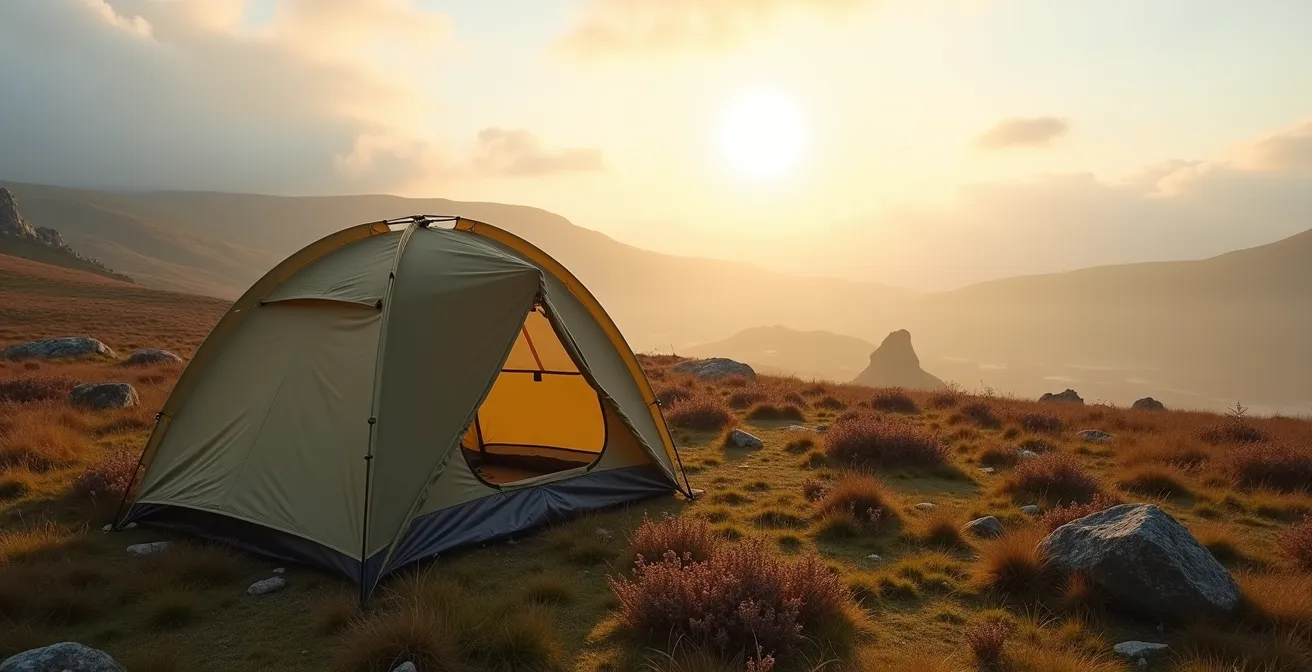
Wild camping in England and Wales isn’t strictly ‘illegal’—it’s unauthorised. The key lies in shifting from hoping not to be caught to proactively securing legal permission.
- Aside from designated zones in Dartmoor, all land is privately owned, making landowner consent a legal necessity, not a courtesy.
- Trespass is a civil offence, usually resulting in a request to leave, but understanding the law empowers you to navigate encounters correctly.
- A growing network of alternatives, from landowner-direct platforms to farm stays, provides legal and responsible ways to camp in the wild.
Recommendation: Master the art of respectful negotiation with landowners and utilise new platforms that connect campers with those willing to share their space. This is the new fieldcraft for the modern adventurer.
For any adventurer in England and Wales, the scene is painfully familiar. You’re deep in the hills, the sun is setting, and you’ve found the perfect, secluded spot to pitch a tent. A sense of peace descends, quickly followed by a nagging uncertainty: “Am I allowed to be here?” The confusion is understandable. Campers look north to Scotland, a utopia of wild camping freedom thanks to the Land Reform Act of 2003, and then back at the patchwork of “Private Property” and “Keep Out” signs in England and Wales, wondering where they stand.
The common wisdom is a blunt instrument: it’s illegal, it’s trespass, and you risk being moved on in the middle of the night. While technically correct, this black-and-white view misses the crucial grey areas that an experienced outdoor enthusiast can navigate. It ignores the difference between a civil and a criminal matter, the specific exceptions written into local byelaws, and the unwritten rules of rural etiquette that can turn a firm “no” into a welcoming nod. This isn’t a guide on how to get away with it; it’s a legal and practical toolkit for camping with consent and confidence.
This article will dissect the legal landscape, starting with the one area where wild camping is a right. We will then equip you with the skills to legally secure a pitch elsewhere, cover the essential fieldcraft that demonstrates your responsibility, clarify the strange paradoxes at the border, and reveal the growing number of creative, legal alternatives to traditional wild camping. It’s time to replace confusion with competence.
Summary: Your Legal Map to Wild Camping in England and Wales
- Why Dartmoor Is the Only Place You Can Legally Pitch Without Asking?
- How to Ask a Farmer for Permission to Camp on Their Land?
- Trowel or Bag It: What Is the Correct Toilet Etiquette in the Wild?
- The Disposable BBQ Error That Could Land You in Court
- Right to Roam vs Trespass: How Rules Change Once You Cross the Border?
- How to Find Private Landowners Willing to Share Garden Space?
- When to Reserve Campsites for Peak Season to Avoid Sleeping Outside?
- How to Skip the 5-Year Waiting List for a Council Allotment in Your Area?
Why Dartmoor Is the Only Place You Can Legally Pitch Without Asking?
In the complex legal terrain of English land access, Dartmoor National Park stands alone as a beacon for wild campers. This unique status is not a modern concession but a right rooted in historical tradition and law. For decades, the ability to camp on the Dartmoor commons was assumed, based on a custom stretching back generations. This was enshrined in the National Parks and Access to the Countryside Act 1949 and later confirmed by Dartmoor Commons Act 1985. However, a 2023 court challenge by a local landowner temporarily threw this right into question, before the Supreme Court recently confirmed that Dartmoor is the only place in England where you have a legal right to wild camp without seeking permission.
This right, however, is not a free-for-all. It comes with a strict set of responsibilities and limitations defined by the Dartmoor National Park Authority (DNPA) byelaws. These rules are designed to protect the fragile ecosystem, respect farming operations, and ensure the safety of visitors on this historic landscape. Understanding and adhering to these rules is a non-negotiable part of exercising your right to camp here.
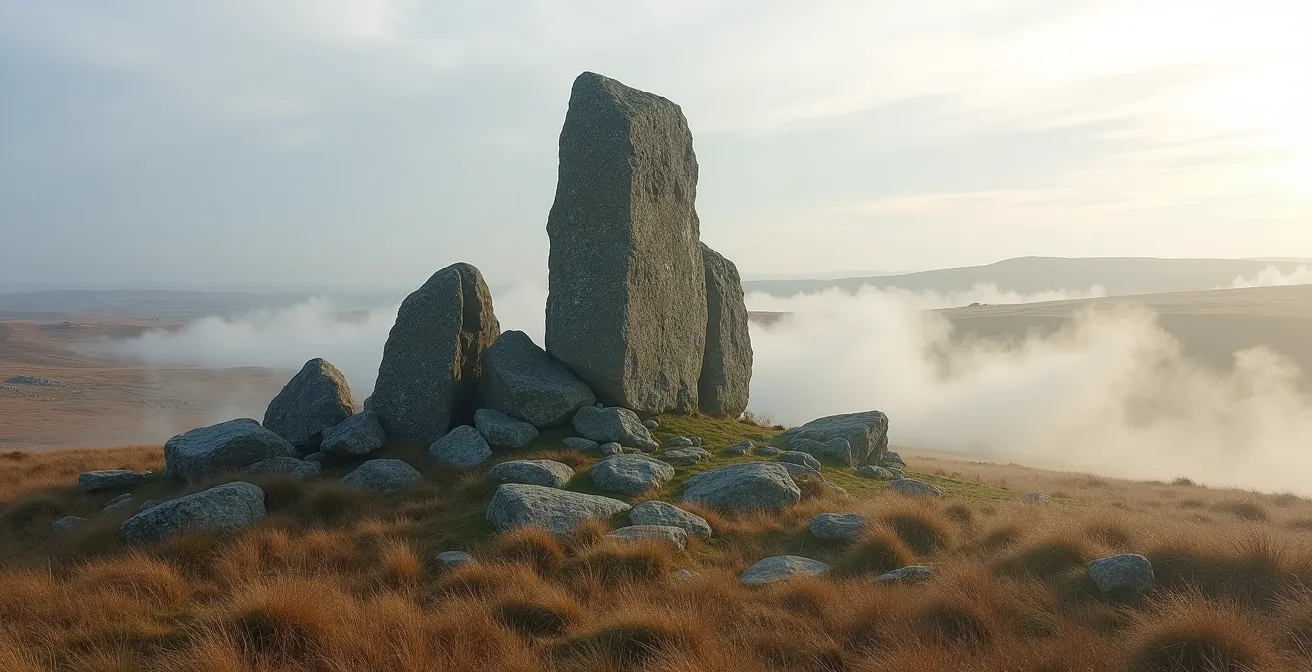
The rules focus on low-impact, backpack camping. This means small tents, for short stays (one to two nights maximum), and a strict “leave no trace” policy. Certain areas are permanently off-limits to camping to protect sensitive archaeological sites or farmland, and it’s essential to consult the DNPA’s official interactive map before you even pack your bag. Furthermore, parts of Dartmoor are used as military firing ranges, and checking the firing times is a critical safety step.
Your Legal Wild Camp Pre-Departure Audit
- Legality Check: Is my target location within the permitted camping zones on the official DNPA map? If not, do I have explicit, written landowner permission for my alternative location?
- Impact Assessment: Have I planned a pitch at least 100 metres from any road and well away from streams or rivers to protect water sources? Have I checked for signs of livestock or sensitive ground nesting birds?
- Etiquette Compliance: Is a lightweight trowel for burying human waste (at least 15cm deep) in my pack, or do I have a ‘pack-it-out’ system like a WAG bag for high-traffic or sensitive areas?
- Fire Safety Protocol: Am I exclusively using a contained gas stove for cooking? Have I confirmed there are no fire bans in place and that my pitch is clear of dry grass, heather, or peat?
- Exit Strategy: If planning to camp outside of Dartmoor, do I have a backup plan, such as a nearby official campsite, in case permission is denied or I am asked to move on?
How to Ask a Farmer for Permission to Camp on Their Land?
Outside the sanctuary of Dartmoor, every square inch of England and Wales is owned by someone. Therefore, the most crucial piece of equipment for a would-be wild camper is not a tent or a sleeping bag, but the skill of respectful negotiation. Asking a farmer or landowner for permission is not just a courtesy; it is the act that transforms trespass into a legitimate stay. Success hinges on your approach, timing, and demonstrating that you are a responsible custodian of the outdoors, not a liability.
The key is to make it easy for them to say yes. Approach in person, well before dusk, so you don’t appear to be chancing your arm after dark. Introduce yourself, be clear about your intentions (a single person or a couple in a small tent for one night), and offer a small payment (£5-£10 is often welcome) as a gesture of goodwill. Highlighting that you are a member of an organisation like the British Mountaineering Council (BMC), which includes liability insurance, can provide significant reassurance. The golden rule is to assure them you will leave the land exactly as you found it. As one successful camper noted, your goal is to be “memorable for your politeness and forgettable in your impact.”
The Perfect Pitch Script for UK Farmers
Successful wild campers report that approaching farmers respectfully with a clear request works best. A proven script involves: introducing yourself clearly, explaining you’re a responsible hiker on a multi-day trip, specifying it’s for one night only in a small tent, offering to pay a small fee of £5-10, and assuring them you adhere to a strict leave no trace policy. Referencing membership of an organisation like the BMC for liability insurance is a powerful trust signal. This approach tends to be more successful in upland areas like Cumbria and the Yorkshire Dales, where landowners are often more accustomed to hikers, than in intensive arable regions where crop damage is a primary concern.
The receptiveness of landowners can vary significantly by region. Understanding these local nuances can greatly increase your chances of success. This is often dictated by the type of farming and the history of tourism in the area.
| Region | Success Rate | Best Approach | Key Concerns |
|---|---|---|---|
| Lake District Uplands | High | Local pub inquiry | Livestock disturbance |
| Yorkshire Dales | Moderate-High | Direct farm approach | Stone wall damage |
| Peak District | Low | Written permission | Fire risk, overcrowding |
| East Anglia Arable | Very Low | Avoid busy seasons | Crop damage |
Trowel or Bag It: What Is the Correct Toilet Etiquette in the Wild?
The correct toilet etiquette in the wild is governed by one non-negotiable principle: leave absolutely no trace of your presence. This means you must either bury human waste properly or, in the most responsible approach, pack it all out with you. In sensitive ecosystems or high-traffic areas like the popular tarns of the Lake District or peaks in Snowdonia, packing it out is now considered the gold standard of outdoor ethics. The choice between a trowel and a bag system is a matter of location, but failing to deal with waste correctly is the fastest way to lose the goodwill of landowners and fellow adventurers.
If you must bury, the rules are strict. You need a small, lightweight trowel to dig a cathole 15-20cm (6-8 inches) deep. This hole must be at least 50 metres (70 adult paces) away from any water source, trail, or campsite to prevent contamination and ensure it isn’t discovered by others. Once used, the hole must be completely filled in and disguised with natural material. Toilet paper should be packed out in a sealed bag; it biodegrades far too slowly and is an unsightly blight on the landscape. Never bury wet wipes, as they contain plastic and do not break down.
For the highest standard of care, dedicated ‘pack it out’ systems are the answer. These kits are no longer a niche product for extreme mountaineers but are becoming mainstream for the conscientious camper.
WAG Bag Solutions for UK Wild Campers
Leading UK outdoor retailers such as Go Outdoors and Cotswold Outdoor now stock specialised “pack it out” systems, reflecting a shift in outdoor ethics. The Cleanwaste GO Anywhere kit, costing around £15-£20, is a popular choice. It includes biodegradable bags filled with a gelling powder that solidifies liquid waste, neutralises odours, and begins the decay process. These self-contained kits are easy to carry and can be disposed of in regular bins. For those focused on burying, ultralight trowels like the Deuce of Spades (weighing just 28g) have become standard issue for long-distance backpackers who count every gram but refuse to compromise on etiquette.
The Disposable BBQ Error That Could Land You in Court
Of all the mistakes a wild camper can make, lighting an open fire or using a disposable BBQ is the most catastrophic and legally perilous. The risk of wildfire, particularly on moorland and in forests with peaty soil, is exceptionally high. A spark from a poorly managed fire can smoulder underground for days before erupting into a devastating blaze. Consequently, open fires are almost universally banned on access land in England and Wales. Ignoring these rules is not just poor etiquette; it’s a reckless act that can lead to severe legal consequences, including hefty fines and even a criminal record.
In response to recent devastating wildfires, many local authorities and National Parks have implemented Public Spaces Protection Orders (PSPOs). These orders give police and park rangers the power to issue on-the-spot fines for lighting any form of fire, including disposable BBQs. Recent wildfires have led to PSPOs in areas like the New Forest with fines from £500 to £1,000. A conviction for arson or criminal damage resulting from a campfire carries the potential for a prison sentence. The message is unequivocal: a warm meal is never worth the risk of destroying a landscape.

The professional and only acceptable alternative is a modern, self-contained camping stove. These systems are efficient, lightweight, and designed for safe use in the wild. They contain the flame, leave no scorch marks on the ground, and are far more effective at boiling water and cooking food, especially in typical British wind and rain.
| System | Weight | Boil Time (1L) | UK Price | Best For |
|---|---|---|---|---|
| Jetboil Flash | 371g | 100 seconds | £110 | Fast solo trips |
| MSR WindBurner | 432g | 4.5 minutes | £140 | Windy conditions |
| Trangia Meths | 330g | 8 minutes | £35 | Budget option |
| Primus Lite+ | 390g | 3 minutes | £95 | All-rounder |
Right to Roam vs Trespass: How Rules Change Once You Cross the Border?
The legal distinction between camping in England and Scotland is one of the most confusing aspects for visitors and UK residents alike. In Scotland, the Land Reform (Scotland) Act 2003 established statutory rights of access to most land for recreation, which includes wild camping. This “right to roam” is a default permission, provided you follow the Scottish Outdoor Access Code. In stark contrast, England and Wales operate under a legal framework where all land is private. There is no assumed right of access for camping. Here, you are technically trespassing unless you are on a public right of way or have been granted explicit permission by the landowner.
This legal chasm is most vividly illustrated in the border regions, where the rules can change literally from one footstep to the next. The experience can be surreal for long-distance hikers traversing trails that straddle the border.
The Cheviot Hills Border Camping Paradox
The Cheviot Hills in Northumberland National Park provide a perfect real-world example of the UK’s divided camping laws. The famous Pennine Way footpath weaves across the Anglo-Scottish border in this area. Hikers report the bizarre experience of being able to legally pitch their tent on the Scottish side of the path, while the English side, just a few metres away, would constitute civil trespass without the landowner’s permission. Local park rangers confirm that in these zones, GPS accuracy is paramount. Being ten metres off in your camp location could be the difference between exercising a legal right and breaking the law, demonstrating how arbitrary and absolute the border can be.
It’s crucial, however, to understand what “trespass” means in England and Wales. It is a civil, not a criminal, matter. You cannot be arrested for simple trespass. The landowner’s primary recourse is to ask you to leave. If you refuse, you may be sued for damages (unlikely if you’ve caused none) or have a court injunction sought against you. Only in rare cases, such as “aggravated trespass” where you are intimidating or disrupting a lawful activity, does it become a criminal offence.
Trespass is a civil matter unless it’s aggravated trespass. A typical encounter with a landowner or police officer usually entails a request to leave, not immediate arrest.
– UK Camping and Caravanning Club, Wild Camping in the UK Explained
How to Find Private Landowners Willing to Share Garden Space?
For those daunted by the prospect of knocking on a random farmhouse door, a new wave of digital platforms and informal networks provides a bridge to landowners who are actively willing to share their space. This “nearly wild” camping movement offers a fantastic compromise, providing the solitude and back-to-basics feel of wild camping but with the certainty of a legal, pre-approved pitch. These spaces can range from a secluded corner of a farmer’s field to a patch of private woodland or even a large back garden.
These platforms effectively act as matchmakers, connecting campers with hosts for a small fee. They remove the anxiety of seeking permission and often provide access to basic amenities like a water tap or a simple toilet, which can be a welcome luxury. This approach is becoming increasingly popular as a reliable backup plan or as a primary method for exploring the countryside without falling foul of trespass laws.
- Wildpoint & Hipcamp: These platforms are like an “Airbnb for camping,” connecting campers with private landowners offering everything from basic pitches to glamping experiences.
- Nearly Wild Camping: A non-profit cooperative with a network of over 100 locations across the UK offering secluded, simple camping for those looking to escape crowded campsites.
- BritStops: Aimed at campervans and motorhomes, this scheme allows members to park overnight for free at a network of pubs, farm shops, and vineyards in exchange for patronising the business.
- Pitchup.com: While primarily for commercial campsites, its search filters can reveal small, basic “certified locations” that offer a close-to-wild experience, especially for last-minute bookings.
This trend is supported by a specific piece of UK planning legislation that makes it easy for landowners to participate without needing to become a fully-licensed campsite. This legal framework has been the quiet engine behind the growth of garden and small-field camping.
Garden Camping and the 42-Day Rule
UK campsite licensing regulations, specifically under the Town and Country Planning Act, allow landowners to host camping on their land for up to 42 consecutive days, and for up to 60 days in total in any year, without needing a full campsite license. This “42-day rule” (sometimes referred to as the 28-day rule in older legislation) creates a legal and straightforward opportunity for farmers, smallholders, and homeowners with large gardens to welcome campers on a temporary basis. For peace of mind, a simple written agreement covering dates, access, and liability is wise. It’s important for campers to have their own liability coverage (e.g., through the BMC), as a landowner’s standard home insurance is unlikely to cover paying guests.
When to Reserve Campsites for Peak Season to Avoid Sleeping Outside?
While the spirit of wild camping is about spontaneity, the reality of camping in England and Wales requires a pragmatic backup plan. The surest way to find yourself sleeping in your car (which is also subject to trespass laws) is to assume you can find a spot on an official campsite at the last minute during peak season. For popular areas, booking well in advance is not just advisable; it’s essential. This is your safety net if you fail to get landowner permission or are moved on from an unauthorised pitch.
The “peak season” is predictable. It covers all UK Bank Holiday weekends (Easter, early May, late May, and August) and the entire school summer holiday period, typically from late July to early September. During these times, demand for campsites in prime locations like Cornwall, the Lake District, the Peak District, and the Pembrokeshire coast skyrockets. For well-regarded sites in these areas, it’s not uncommon for bookings to open 9 to 12 months in advance and fill up within weeks. Waiting until the spring to book a summer bank holiday weekend is a recipe for disappointment.
As a rule of thumb, for a peak season trip, you should aim to have your main campsite bookings confirmed by January at the latest. For non-bank holiday weekends in the summer, booking 3-4 months ahead is a safer bet. This strategic planning might seem counterintuitive to the wild camping ethos, but it’s a professional approach. It provides a legal and guaranteed place to stay, allowing you to use it as a base for day hikes or as a fallback if your more adventurous plans don’t work out. It’s the difference between a failed trip and a successful adventure with a secure plan B.
Key takeaways
- Outside of designated zones in Dartmoor, there is no legal “right to wild camp” in England and Wales; explicit landowner permission is a legal requirement.
- Trespass is a civil offence, not a criminal one. The standard outcome of being discovered is a polite request to leave, which you should always comply with immediately.
- Fire is the greatest risk and legal liability. Open fires and disposable BBQs are banned in most areas; a contained gas stove is the only responsible option for cooking.
How to Skip the 5-Year Waiting List for a Council Allotment in Your Area?
While the title might seem to refer to gardening, its core question is about a deeper desire shared by many outdoor enthusiasts: gaining access to a small piece of land. Just as allotment waiting lists stretch for years, finding a guaranteed spot to legally connect with nature can feel impossible. However, a creative and fulfilling alternative exists that bypasses waiting lists and trespass laws entirely: land access through volunteering. By contributing your time to conservation charities, you can gain legitimate, and often overnight, access to some of the UK’s most beautiful private woodlands and estates.
Organisations like the National Trust, the Woodland Trust, and various Community Supported Agriculture (CSA) schemes are constantly in need of volunteers for habitat management, trail maintenance, and conservation projects. In return for your labour, many of these schemes offer unique benefits, including the right to camp on-site during the project. This provides a powerful, purpose-driven way to sleep outdoors legally.
Community Land Access Through Volunteering
Rather than waiting for land access to be granted, many outdoor enthusiasts proactively earn it. The National Trust’s working holidays and “Basecamps” often provide basic accommodation or camping in exchange for work on their historic properties. Similarly, the Woodland Trust’s volunteer program can include opportunities for overnight stays in protected woodland areas for tasks like tree planting or invasive species removal. These programs offer a legitimate, structured, and rewarding way to sleep outdoors while making a tangible contribution to the conservation of the very landscapes you love to explore.
Finally, a piece of advanced knowledge for any aspiring wild camper is learning to read an Ordnance Survey map not just for topography, but for legal clues. Certain symbols can indicate a landowner’s potential receptiveness to a polite request.
Permissive paths on OS maps indicate landowners who grant public access beyond legal rights of way – these landowners may be more receptive to polite camping requests.
– Ordnance Survey, OS GetOutside Wild Camping Guide
Start exploring these legal and creative avenues to unlock your next adventure. Whether it’s by meticulously planning a trip to Dartmoor, volunteering for a conservation charity, or using a platform to connect directly with a landowner, you can camp with confidence and a clear conscience, leaving the landscape better than you found it.