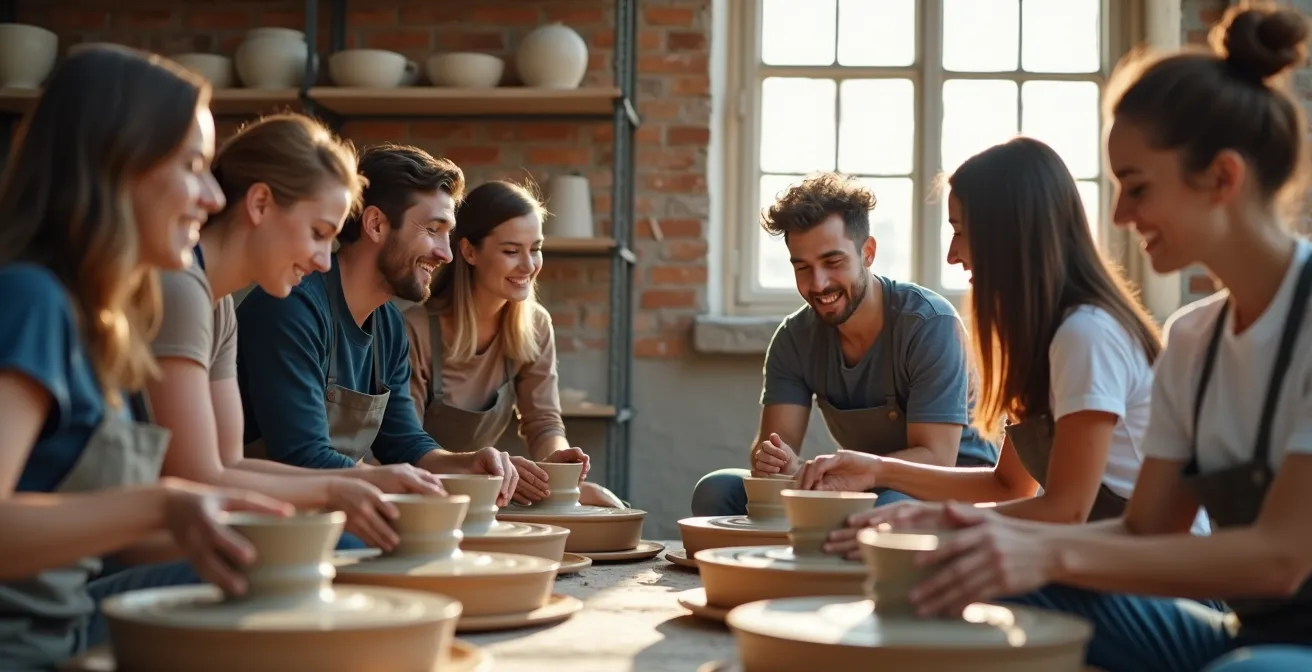
The rise of pottery classes in Bristol isn’t just about crafting; it’s a fundamental shift towards ‘positive-sum’ socialising that the traditional pub scene cannot offer.
- The tactile nature of clay actively reduces anxiety by forcing a state of mindful focus, creating a welcome escape from digital saturation.
- The shared, low-stakes challenge of learning a new skill fosters authentic bonds through ‘collaborative vulnerability’, where imperfection is part of the experience.
Recommendation: View these workshops not as a mere hobby, but as a strategic investment in both your mental well-being and the construction of a genuine, local community.
For many young professionals in Bristol, the weekly social ritual can feel like a well-worn groove: the familiar chatter of a pub, the clinking of glasses, the predictable cycle of conversation. It’s a cornerstone of British social life, yet a growing sense of ‘pub fatigue’ is setting in. The search for alternatives often leads to board game cafes or other organised fun, but these can introduce their own pressures of competition or forced conviviality. A different kind of revolution is quietly taking shape, not in bustling bars, but in the calm, focused hum of pottery studios across the city.
This shift from pint to pottery is more than a fleeting trend. It represents a deeper desire to trade passive consumption for active creation, and superficial interactions for meaningful connection. While the idea that crafts are ‘relaxing’ is a common refrain, it barely scratches the surface of what’s happening. The appeal lies in how these workshops are engineered to deliver a powerful cocktail of psychological benefits: tangible achievement, mindful focus, and a unique form of social bonding built on shared vulnerability. It’s a move away from zero-sum socialising, where the goal is to be the wittiest or win the game, towards a collaborative environment where simply participating and creating is the victory.
This article explores the cultural and psychological drivers behind this movement. We will analyse why working with clay is so effective at calming modern anxieties, help you navigate the practical choices between different types of classes, and examine the ‘Instagram vs. Reality’ of learning a new craft. Finally, we’ll look at how the success of pottery provides a blueprint for supporting other, more endangered crafts, solidifying its place as a significant cultural shift in how we choose to connect.
Summary: The Rise of the Pottery Wheel as Bristol’s New Social Hub
- Why Working with Clay Reduces Anxiety Faster Than Scrollling?
- Wheel Throwing or Hand Building: Which Is Better for Complete Beginners?
- 6-Week Course or Weekend Workshop: Which Actually Teaches You Skills?
- The ‘Instagram vs Reality’ Trap in Craft Workshops
- How to Find independent Workshops Not Listed on Eventbrite?
- Why ‘Monopoly’ Is the Worst Game for Breaking the Ice?
- Why Are Young People Not Becoming Blacksmiths in 2025?
- How to Support Endangered Crafts Like Clog Making Before They Vanish?
Why Working with Clay Reduces Anxiety Faster Than Scrollling?
The relentless scroll on our phones promises connection and distraction but often delivers the opposite: a low-grade hum of anxiety and a feeling of time lost. The appeal of pottery lies in its powerful, grounding antidote to this digital malaise. It’s an act of engineered focus. Your hands are covered in clay, your mind is entirely consumed by the task of centering a spinning lump of earth. In this state, there is no room for the anxious inner monologue or the phantom buzz of a notification. It’s a forced mindfulness that is both immediate and deeply effective.
This isn’t just a feeling; it’s rooted in neuroscience. The intense sensory feedback and fine motor control required engage a vast portion of our brain. As neuroscientist Dr. Kelly Lambert notes, considering the brain area dedicated to our hands, it is likely that “behavior maximizing the use of the hands may be the most engaging”. This deep engagement shifts our mental state away from the abstract worries that fuel anxiety and into the tangible present. The physical act of shaping, moulding, and creating provides a productive outlet for nervous energy.
The chemical impact is also measurable. Repetitive, creative activities have a direct effect on our stress levels. In fact, research shows that creative activities like working with clay can significantly lower the stress hormone cortisol after just 45 minutes. This provides a physiological reset that passive consumption, like scrolling through social media or watching a series, simply cannot match. It’s a proactive form of self-care that leaves you not just distracted, but genuinely restored.
Wheel Throwing or Hand Building: Which Is Better for Complete Beginners?
Stepping into a pottery studio for the first time, the initial choice can seem daunting: do you face the iconic challenge of the potter’s wheel or opt for the more freeform approach of hand building? The answer depends entirely on your personal goals for the session, particularly whether you’re seeking intense focus or social connection. Neither is “better,” but each fosters a very different experience.
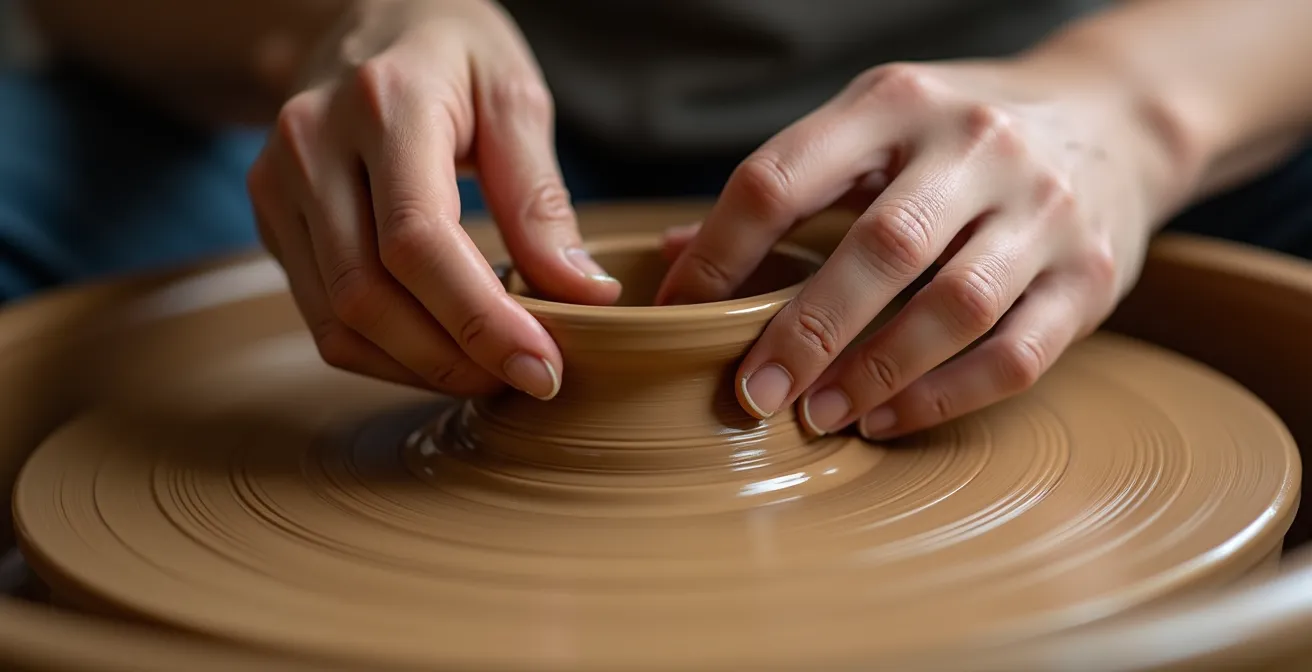
As the image above so beautifully illustrates, wheel throwing is an intimate, almost meditative dialogue between you and the clay. It demands total concentration, making it an excellent tool for shutting out the world and entering a state of flow. The learning curve is steep, and initial attempts are often humbling, but the satisfaction of finally centering the clay is a significant personal victory. Conversely, hand building—which includes techniques like pinching, coiling, and slab work—is a slower, more forgiving process. It’s less technically demanding at the outset, allowing for more conversation and collaboration with those around you.
For those new to the craft, this choice is crucial. Consider the following points when deciding:
- Consider hand building if you want to socialize, as its slower pace allows for conversation while working.
- Choose wheel throwing if you seek individual focus and the challenge of mastering a technical skill.
- Try a taster session that includes both techniques before committing to a longer course.
- Factor in that hand building requires less initial coordination but more patience for construction.
- Remember wheel work demands intense concentration initially but can offer quicker results once the basics are mastered.
6-Week Course or Weekend Workshop: Which Actually Teaches You Skills?
The pottery scene in Bristol caters to every level of commitment, from a two-hour “taster” to a comprehensive multi-week course. The choice between a brief, entertaining workshop and a longer-term skill-building course is a strategic one. It’s the difference between treating pottery as a one-off “entertainment expense” and a genuine “skill investment.” A weekend workshop is perfect for a first date or a novel night out, offering a glimpse into the craft and a single, cherished (if wobbly) creation to take home.
However, to truly learn the craft, consistency is key. A longer format, like a six or eight-week course, is where real development happens. These structured programs allow for the repetition and progressive learning necessary to build muscle memory and understand the material’s nuances—from wedging and centering to trimming and glazing. As many Bristol studios confirm, their foundation pottery courses typically run for 8 weeks, providing enough time to build a solid base. More importantly, these courses foster a sense of community. You’re not just a fleeting visitor; you become part of a cohort, sharing struggles, celebrating breakthroughs, and building relationships over time. This transforms the studio from a place of activity into a place of belonging.
The following table breaks down the key differences to help guide your decision:
| Aspect | Weekend Workshop | 6-8 Week Course |
|---|---|---|
| Skill Development | Basic introduction | Foundation to intermediate skills |
| Social Connection | One-time interaction | Cohort building over weeks |
| Cost Category | Entertainment expense | Skill investment |
| Studio Access | Limited to workshop | Often includes membership pathway |
| Pieces Created | 1-2 items | Multiple projects |
The ‘Instagram vs Reality’ Trap in Craft Workshops
Social media feeds are filled with images of serene-looking individuals holding perfectly formed, minimalist ceramic masterpieces. This curated perfection creates an “Instagram vs. Reality” trap for newcomers, setting an impossibly high bar and fostering a fear of failure. The reality of a first pottery class is wonderfully messy: lopsided pots, collapsed walls, and the occasional piece flying off the wheel. And therein lies the magic. The true value of the experience is not in creating a flawless object, but in embracing the imperfect process.
This is where pottery cultivates a healthy relationship with imperfection. It’s a low-stakes environment for failure. A collapsed pot isn’t a disaster; it’s just a lump of clay that can be wedged and thrown again. This freedom to fail and restart without consequence is a powerful lesson in resilience. It fosters what can be called ‘collaborative vulnerability’—a shared space where everyone is a beginner, everyone is struggling a little, and everyone can laugh at their own wonky creations. This shared experience breaks down social barriers far more effectively than any icebreaker game.
It’s a therapeutic process of letting go of the outcome and finding joy in the making. As one practitioner in pottery therapy insightfully shares, “It’s really hard to get rid of stuff that’s in your head, but you don’t have to give it prime real estate in your mental life.” The imperfect pot becomes a physical manifestation of this principle—a tangible reminder that letting go of the need for perfection is not only acceptable, but liberating. It’s an exercise in processing emotions, not producing products.
How to Find independent Workshops Not Listed on Eventbrite?
While large booking platforms like Eventbrite or ClassBento are excellent starting points, some of Bristol’s most authentic and exciting pottery experiences happen in smaller, independent studios tucked away from the main digital thoroughfares. These artist-led spaces often offer a more intimate, less commercialised atmosphere, where you might be learning directly from a ceramicist in their personal workspace. Finding them requires a bit of old-school, on-the-ground detective work, but the reward is a deeper connection to the city’s vibrant maker scene.
These independent hubs are the lifeblood of Bristol’s creative ecosystem, often located in converted industrial buildings or community-focused areas that foster a collaborative spirit. They are places where the focus is purely on the craft and community, rather than high-volume turnover. Exploring these spaces feels less like being a customer and more like being welcomed into a creative sanctuary.
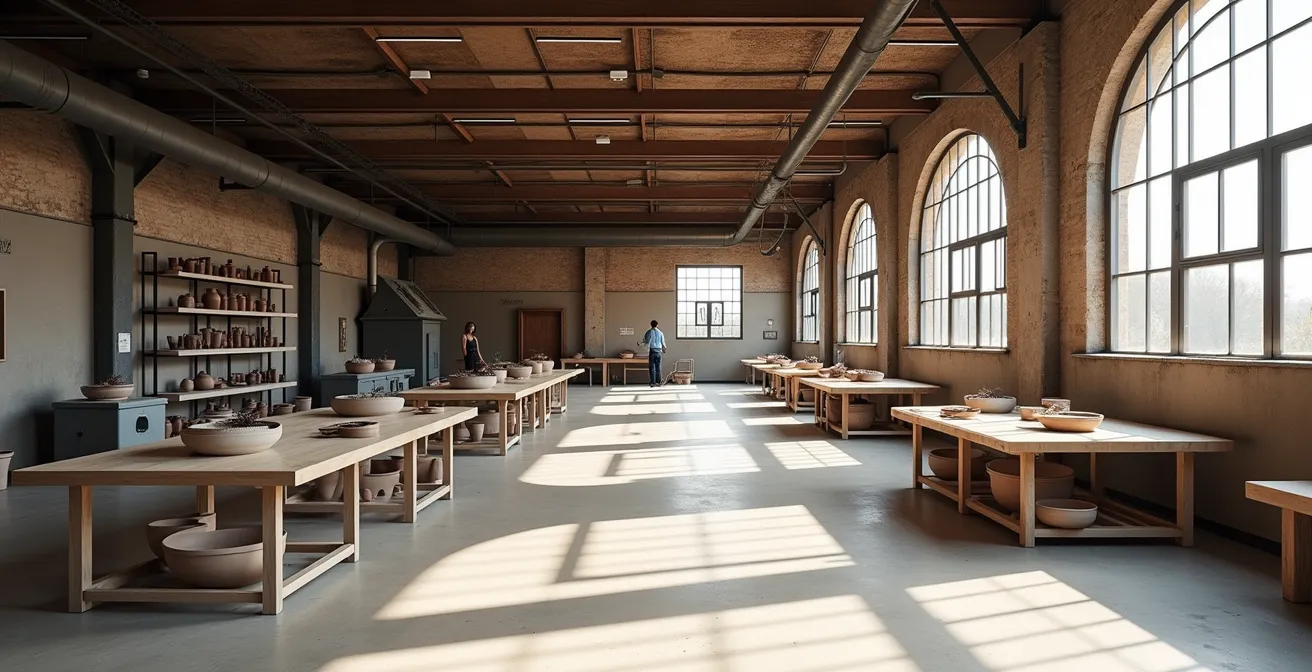
To unearth these hidden gems, you need to think like a local. It means looking beyond the first page of Google and engaging with the community directly. Here is a practical guide to get you started:
Action Plan: Locating Bristol’s Hidden Pottery Studios
- Explore Creative Hubs: Visit places like Windmill Hill City Farm in Bedminster, where independent ceramicists have established studio spaces.
- Check Community Notice Boards: Look for flyers and announcements at local community centres, such as the Tobacco Factory Market or the Better Food Co-op.
- Wander Artist Quarters: Take a walk through areas like Stokes Croft, known for artist-led studios that may offer informal or pop-up pottery sessions.
- Investigate Industrial Zones: Search for converted industrial spaces in St Philip’s Marsh and Bedminster, as these are often home to kiln-equipped studios that artists share.
- Follow the Source: Use social media to follow local Bristol-based ceramicists, who often announce their own pop-up workshops or classes directly to their followers.
Why ‘Monopoly’ Is the Worst Game for Breaking the Ice?
Think about the social dynamic of a game like Monopoly. It’s inherently a zero-sum activity: for you to win, someone else must lose. The game is designed to create a single victor through the slow, grinding bankruptcy of everyone else. While fun in the right context, this competitive framework is a terrible way to break the ice and foster genuine connection. It encourages strategic maneuvering and self-interest, not collaboration or vulnerability. The pub, while less overtly competitive, can also foster a subtle social contest of wit, status, or storytelling prowess.
Pottery classes offer the complete opposite: positive-sum socializing. In a workshop, there are no winners or losers. Everyone’s success is independent and, in fact, complementary. The collective energy of a room full of people focused on creation is uplifting. Sharing a tip, admiring a neighbour’s progress, or laughing together at a collapsed pot are all moments that build camaraderie, not rivalry. It creates an environment where guards can be lowered because there is no social game to be won.
Case Study: Bristol’s Pottery & Prosecco Workshops
The success of pottery and prosecco workshops, particularly popular in vibrant areas like Stokes Croft, perfectly illustrates this principle. They reframe the start of a weekend away from the pub and towards collaborative creation. As one local guide puts it, a Friday workshop is “a banging way to start the weekend. Plus you are right in the middle of Stokes Croft, one of the best locations in Bristol for a night out.” This demonstrates how pottery isn’t just an alternative to a night out; it’s becoming the new, more connective foundation for one. The shared creative act provides a basis for easy conversation that can then be carried into the rest of the evening.
Why Are Young People Not Becoming Blacksmiths in 2025?
While the maker movement is thriving, not all crafts are enjoying the same renaissance as pottery. Heritage skills like blacksmithing, weaving, or clog making face a steeper battle for relevance, and the reason often comes down to one crucial factor: craft accessibility. Pottery has been masterfully packaged for the modern urban professional. Its success lies in lowering the barriers to entry in terms of time, cost, and logistics, making it an easy and appealing choice for a casual evening or weekend activity.
A key innovation has been the rise of short-form classes. Many Bristol studios have found success because they successfully offer casual 2-hour taster sessions. This small time commitment makes it an easy ‘yes’ for someone with a busy schedule. Blacksmithing, by contrast, often requires a full-day commitment due to the extensive setup and safety training involved. This immediately prices it out of the “casual weeknight activity” market.
The physical requirements and zoning laws for different crafts also play a huge role. A pottery studio can operate in a mixed-use commercial unit, whereas a forge requires industrial zoning, ventilation, and a much higher initial investment. This contrast in accessibility is the primary reason one craft flourishes as a social hobby while another remains the domain of dedicated artisans.
| Factor | Pottery | Blacksmithing |
|---|---|---|
| Minimum Session Length | 2 hours | Full day |
| Space Requirements | Small studio unit | Industrial forge space |
| Safety Training | Basic introduction | Extensive safety protocols |
| Urban Zoning | Mixed-use acceptable | Industrial zones only |
| Initial Investment | Wheel and kiln share | Forge and ventilation |
Key Takeaways
- Pottery’s success lies in offering ‘positive-sum socializing’ through collaborative vulnerability, a direct antidote to competitive or superficial social settings.
- The tactile process of working with clay is a form of ‘engineered focus’, proven to reduce stress hormones more effectively than passive digital consumption.
- The pottery business model (taster sessions, pop-up events) provides a blueprint for making other endangered heritage crafts accessible and relevant to a modern urban audience.
How to Support Endangered Crafts Like Clog Making Before They Vanish?
The meteoric rise of pottery as a social pastime isn’t just an isolated phenomenon; it’s a playbook. It offers a clear, replicable model that could be used to breathe new life into other heritage crafts that are currently at risk of disappearing. The key is to shift the marketing from the functional output (a clog, a basket) to the experiential process (a unique “heritage experience,” a memorable date night, a mindful afternoon). It’s about selling the feeling, not just the object.
This is precisely the strategy that has worked so well in Bristol. As the founders of Pottymouth Workshop, Naomi Stokes and Meredith Mason, explain, their journey was about accessibility: “We began by running small pottery pop-ups in some of our favourite pubs around Bristol, just for the joy of getting people making.” This genius move met people where they already were, bridging the gap between the traditional social space (the pub) and the creative one. It removed the intimidation factor of walking into a formal studio and made the craft feel like a natural extension of a social evening.
Applying this model to other skills could be transformative. Imagine a “Weave and Wine” night, a weekend spoon-carving workshop, or a “Date Night with Leatherwork” session. The principles are the same: make it short, make it social, and make it accessible. By partnering with organisations like The Heritage Crafts Association, practitioners of endangered skills can gain expertise in marketing and event management to reframe their craft for the experience economy.
- Offer weekend workshops and date-night sessions for endangered crafts like traditional weaving.
- Partner with The Heritage Crafts Association for expertise and funding opportunities.
- Reframe marketing from functional output to ‘heritage experience’ for the experience economy.
- Create pop-up sessions in accessible venues like pubs and markets, as pottery studios have done.
- Develop 4-week introductory courses that build communities around traditional skills.
The next step, therefore, isn’t just to book a class, but to embrace the process of learning and connecting. Find a local studio, get your hands dirty, and discover the community waiting to be built, one piece of clay at a time.